American Avocet
Listen to the American Avocet
Scientific name: Recurvirostra americana
Fanily Recurvirostra americana
By Les Miller
Introduction/overview
The American Avocet has a distinctive, high-pitched voice. Its calls often consist of repeated, nasal notes that sound like wheet-wheet-wheet or pleet-pleet-pleet. These calls become especially noticeable when birds are alarmed or defending their nesting territories.
During courtship and interactions with other avocets, they also produce softer, more varied vocalizations. Learning these sounds can help birders recognize an American Avocet even before spotting its slender shape along a shoreline.
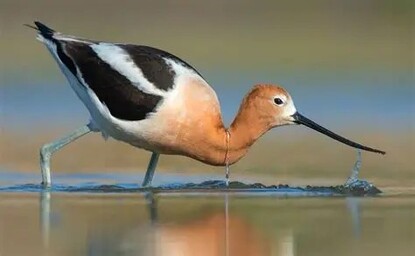
The American Avocet is an elegant shorebird recognized by its long, slender legs, distinctive upward-curving bill, and striking black-and-white wings. During the breeding season, its head and neck take on a warm cinnamon color, making this graceful bird especially beautiful to observe.
American Avocets spend much of their time wading through shallow water, sweeping their bills from side to side to capture small aquatic creatures. They are most commonly associated with wetlands, shallow lakes, and mudflats across western and central North America.
In Wisconsin, the American Avocet is an uncommon visitor, most often encountered during migration. Birders may occasionally spot one along a Great Lakes shoreline or in suitable shallow-water habitats elsewhere in the state.
how to recognize it
The American Avocet is a tall, slender shorebird measuring approximately 16–20 inches long, with a wingspan of about 27–30 inches. Its most distinctive feature is a long, thin bill that curves upward, giving the bird an unmistakable profile. Its long, bluish-gray legs allow it to wade through shallow water while searching for food.
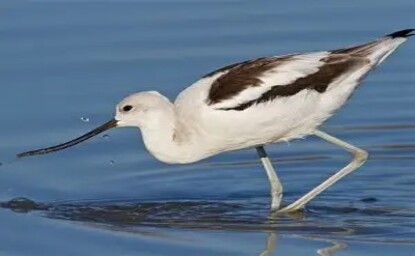
During the breeding season, adults display a warm cinnamon-colored head and neck that contrasts with a white body and bold black-and-white wings. In fall and winter, the cinnamon color fades to pale gray or whitish, creating a noticeably different appearance. Males and females look similar, although females often have shorter, more strongly curved bills.
In flight, the American Avocet reveals a striking pattern of broad black-and-white wing markings. Its long legs extend beyond its tail, making it recognizable even at a distance.
American Avocet Non-Breeding
Habitat and Where to Look in Wisconsin
American Avocets prefer open wetlands, shallow lakes, mudflats, and shorelines with little vegetation. Their long legs and specialized bills allow them to search for food in shallow water, where small aquatic creatures are plentiful.
In Wisconsin, American Avocets are uncommon visitors, most often observed during spring and fall migration. Birders should watch for them along the Lake Michigan shoreline, on exposed mudflats, and around shallow inland wetlands. Lower water levels can create feeding areas that attract migrating shorebirds.
When searching for American Avocets, scan open shorelines and shallow water rather than heavily vegetated marshes. Look for their distinctive black-and-white plumage, long bluish-gray legs, and graceful movements. A spotting scope can be especially helpful when observing birds from a distance.
Diet and Feeding Behavior
American Avocets feed primarily on small aquatic invertebrates, including insects, insect larvae, crustaceans, and other tiny creatures found in shallow water and soft mud.
Their long, upward-curving bills are specially adapted for a distinctive feeding technique. As they wade through shallow water, avocets often sweep their partially open bills from side to side, capturing small prey by touch. They also pick food directly from the water's surface or probe into soft sediment.
American Avocets sometimes feed together in groups, moving gracefully through shallow wetlands as they search for food. For Wisconsin birders fortunate enough to encounter this uncommon visitor, watching its sweeping bill movements can be one of the most memorable parts of the sighting.
Nesting and Family Life
American Avocets usually nest in open areas near shallow wetlands, lakes, and mudflats. Their nests are simple depressions scraped into bare ground, sometimes lined with small stones, shells, or bits of vegetation. They often nest in loose colonies, where neighboring birds help alert one another to approaching danger.
A typical clutch contains three or four eggs, which both parents incubate for approximately three to four weeks. When predators approach, adult avocets may call loudly, spread their wings, or perform distraction displays to draw attention away from their nests.
American Avocet chicks hatch covered in soft down and can walk and swim soon after emerging from their eggs. Unlike many songbirds, the chicks begin finding their own food almost immediately, although both parents continue protecting them. Young avocets generally learn to fly about four to five weeks after hatching.
Most American Avocets breed farther west in North America, so Wisconsin sightings usually involve migrating birds rather than nesting pairs.
Migration and Seasonal Presence in Wisconsin
American Avocets are uncommon visitors to Wisconsin, appearing primarily during spring and fall migration. Spring sightings are most likely in April and May, when birds move north toward their breeding grounds in western and central North America.
Southward migration may begin as early as July, with additional sightings possible through September and October. During these periods, American Avocets may stop at shallow wetlands, exposed mudflats, and lakeshores to rest and feed before continuing their journeys.
Most American Avocets spend the breeding season farther west and winter in warmer coastal regions of the southern United States and Mexico. They are not regular winter residents in Wisconsin, making a migrating avocet a special discovery for local birders.
Because sightings are unpredictable, checking recent bird reports can help Wisconsin birders learn when and where these elegant shorebirds have appeared.
Conservation and Population Challenges
American Avocet populations are considered relatively stable overall, but these elegant shorebirds face several conservation challenges. The loss and degradation of wetlands, changes in water levels, pollution, and climate change can threaten the shallow-water habitats they depend on for feeding and nesting.
Because American Avocets often nest on exposed ground near water, their eggs and chicks are especially vulnerable to flooding, predators, and human disturbance. Maintaining healthy wetlands with suitable water levels and undisturbed nesting areas is important for their long-term survival.
In Wisconsin, protecting wetlands, mudflats, and Great Lakes shorelines benefits migrating American Avocets and many other shorebirds. Birders can help by supporting wetland conservation, reducing pollution, keeping a respectful distance from feeding birds, and participating in bird-monitoring programs that track migration and habitat use.
Interesting Facts About the American Avocet
The American Avocet has several fascinating characteristics that make it one of North America's most recognizable shorebirds.
• A remarkable curved bill: Its long, upward-curving bill allows it to sweep through shallow water and capture tiny aquatic creatures. Females typically have more strongly curved bills than males.
• A dramatic seasonal transformation: During breeding season, the head and neck become a beautiful cinnamon color. In winter, these areas turn pale gray or white.
• An excellent swimmer: Although best known for wading through shallow water, American Avocets can also swim when necessary.
• Protective parents: Adults may perform distraction displays or aggressively defend their nesting areas when predators approach.
• Chicks that feed themselves: Newly hatched avocets can walk and swim soon after hatching and begin finding their own food while their parents provide protection.
Final Thoughts
The American Avocet is a remarkable shorebird whose graceful movements, striking black-and-white wings, and unusual upward-curved bill make it a memorable sight. Watching one sweep its bill through shallow water offers a fascinating glimpse into wetland birds' specialized feeding habits.
Although uncommon in Wisconsin, American Avocets occasionally visit our lakeshores, mudflats, and wetlands during migration. Their appearances remind us to protect the habitats migrating shorebirds depend on throughout their journeys.
For Wisconsin birders, spotting an American Avocet is a special experience and another wonderful reason to keep exploring our state's diverse birdlife.