american coot
Listen to the American Coot
Listen to the American Coot
Scientific Name: Fulica americana
Family: Rallidae (Rails, Gallinules, and Coots)
By Les Miller
introduction/overview
The American Coot is a distinctive waterbird found on Wisconsin's lakes, ponds, marshes, and wetlands. Although it resembles a small duck when swimming, the American Coot belongs to the rail family. Its dark gray body, bright white bill, and unusual swimming behavior make it an interesting bird to observe throughout the state's freshwater habitats.
One of the American Coot's most unusual features is its feet. Unlike ducks, which have webbed feet, coots have large toes with broad, flexible lobes that help them swim and walk across soft, muddy surfaces. Their feet are rarely visible while swimming, making them a fascinating surprise when one walks onto shore.
American Coots are active, social birds that often gather in large groups on open water, especially during migration. They spend much of their time swimming, diving for aquatic plants, and calling to one another. For Wisconsin birdwatchers, their distinctive appearance and lively behavior make them rewarding birds to watch from lakeshores, marsh boardwalks, and wetland observation areas.
How to Identify an American Coot
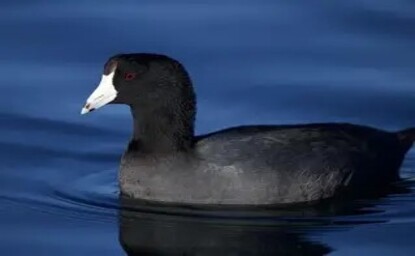
The American Coot is a medium-sized waterbird measuring approximately 13 to 16 inches long. It has a rounded, dark charcoal-gray body, a darker head and neck, and a distinctive white bill that extends upward into a small white frontal shield. Its reddish eyes and short tail are additional identification features. Males and females look nearly identical, although males are generally slightly larger.
One of the American Coot's most unusual characteristics is its feet. Instead of the webbed feet found on ducks, coots have long toes with broad, scalloped lobes that help propel them through the water. Their greenish-yellow legs and unusual feet are most easily seen when they walk along muddy shorelines or climb onto exposed rocks and vegetation.
Although American Coots often swim alongside ducks, their appearance and behavior provide useful identification clues. Coots have a compact body, a pointed white bill, and a characteristic head-bobbing motion while swimming. They can also be distinguished from Common Gallinules, which have red bills tipped with yellow and red frontal shields. In Wisconsin's wetlands, the American Coot's dark body and bright white bill make it relatively easy to recognize even from a distance.
Sounds and Behavior
American Coots produce a remarkable variety of calls, including sharp puk-puk notes, nasal squawks, clucks, and rattling sounds. You can hear their calls across Wisconsin's marshes and shallow lakes, especially in spring and summer, when birds establish territories and communicate with mates and young.
Although American Coots often gather peacefully in groups, they can become highly territorial during the breeding season. They may chase other coots, splash across the water, or confront intruders with their wings raised. During fall migration, large flocks sometimes gather on lakes and wetlands, creating lively scenes as birds swim, dive, and call to one another.
American Coots are strong swimmers and capable divers, frequently submerging to gather aquatic plants from beneath the water's surface. When taking flight, they often run across the water while rapidly beating their wings before becoming airborne. Their distinctive head-bobbing swimming motion and active feeding behavior provide additional clues for identifying them in Wisconsin's freshwater habitats.
Habitat and Diet
American Coots inhabit freshwater marshes, shallow lakes, ponds, and wetlands throughout Wisconsin. They favor areas with open water and dense aquatic vegetation, especially cattails, bulrushes, and other emergent plants that provide feeding opportunities, shelter, and nesting habitat. They may also be seen on larger lakes and sheltered bays during migration.
Their diet consists primarily of aquatic plants, including algae, pondweeds, and other submerged vegetation. American Coots feed by dabbling at the water's surface, dipping their heads underwater, and diving to reach plants growing below. They occasionally eat aquatic insects, snails, small crustaceans, and other invertebrates, particularly during the breeding season.
During spring and summer, American Coots search for food in shallow wetlands and vegetated lake margins. In fall, migrating flocks often gather on larger bodies of water where aquatic plants remain plentiful. As Wisconsin's lakes and marshes begin to freeze, most American Coots migrate south to areas where open water and food remain available.
When and Where to Find American Coots in Wisconsin
American Coots are common seasonal visitors and breeders in Wisconsin, especially from spring through fall. They typically begin returning in March and April as lakes and marshes thaw. During spring migration, groups of coots gather on open water before spreading into suitable wetlands for the breeding season.
Throughout summer, American Coots can be found in freshwater marshes, shallow lakes, and ponds with dense aquatic vegetation. Look for them swimming along the edges of cattail beds, diving for submerged plants, or moving through sheltered bays. Wisconsin's Horicon Marsh is an excellent place to search, along with other large wetlands, wildlife areas, and lakes statewide.
During September and October, migrating American Coots often form large flocks on lakes and marshes. They may remain into November where open water persists, but most leave Wisconsin as freezing temperatures limit access to food. Although a few may occasionally remain during mild winters, American Coots are primarily spring-through-fall birds in Wisconsin. For the best views, scan open water from marsh boardwalks, observation platforms, and accessible shorelines, especially during morning and late afternoon.
Nesting and Family Life
American Coots begin nesting in Wisconsin during spring and early summer, usually in freshwater marshes and shallow wetlands with abundant vegetation. Both parents help construct a floating nest made from cattails, reeds, and other aquatic plants. The nest is typically anchored among standing vegetation, allowing it to rise and fall with changing water levels while providing some protection from predators.
The female commonly lays six to twelve buff-colored eggs marked with dark spots. Both parents share incubation duties for approximately three weeks. Soon after hatching, the chicks can swim and follow their parents through the marsh. Unlike the mostly dark-colored adults, newly hatched American Coot chicks have striking orange-red feathers around their heads and necks, making them surprisingly colorful.
Both parents feed and protect their young as they learn to find food independently. American Coots can be aggressive when defending nesting territories, sometimes chasing other waterbirds away from their young. During Wisconsin's summer months, birdwatchers may spot coot families swimming near cattail beds and sheltered wetland edges. Observing these family groups from a respectful distance is an excellent way to appreciate the American Coot's nesting behavior.
Observing American Coots in Wisconsin
American Coots are enjoyable birds to observe because they spend much of their time swimming in open water and feeding near marsh vegetation. Wisconsin birdwatchers can look for them at freshwater lakes, shallow ponds, and wetlands with cattails or other aquatic plants. Spring and fall are particularly rewarding seasons, when migrating coots may gather in large flocks.
Binoculars usually suffice for watching American Coots up close, while a spotting scope can help identify birds farther out on larger lakes. Look for their dark bodies, bright white bills, and distinctive head-bobbing movements. Watch for coots diving underwater to collect aquatic plants or running across the water before taking flight.
Marsh boardwalks, observation platforms, and public lakeshores offer good opportunities to watch American Coots without disturbing them. Horicon Marsh is one of Wisconsin's notable wetland birding destinations, but smaller marshes and local wildlife areas can also provide excellent sightings. During nesting season, keep a respectful distance from cattail beds and family groups. Quiet observation allows visitors to enjoy the birds' natural behavior while protecting their habitat.