American Crow
Listen to the American Crow
Scientific Name: Corvus brachyrhynchos
Family: Corvidae — Crows, Ravens, Jays, and Magpies
Introduction / Overview
The American Crow (Corvus brachyrhynchos) is one of Wisconsin's most familiar, intelligent, and adaptable birds. Large, all-black, and easily recognized by its loud, distinctive "caw," this remarkable bird can be found throughout Wisconsin in towns, farms, parks, woodlands, fields, and neighborhoods.
American Crows belong to the corvid family, a group of birds known for their intelligence, problem-solving abilities, excellent memories, and complex social behavior. They often travel in family groups, gather in large winter roosts, and work together to drive away hawks, owls, and other potential threats.
Unlike birds that depend on a particular habitat, American Crows thrive in many different environments. They can be observed searching for food in farm fields, perched high in neighborhood trees, exploring woodland edges, or flying across open countryside.
For Wisconsin birdwatchers, the American Crow provides fascinating opportunities to study bird intelligence, communication, social relationships, and everyday behavior. Its familiar appearance makes it easy to recognize, but spending time observing these birds reveals just how complex and resourceful they can be.
How to Recognize It
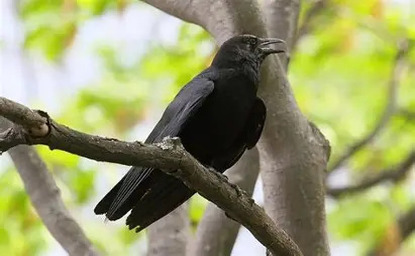
The American Crow is a large, all-black bird with a sturdy body, strong legs, a thick bill, and broad wings. Although its appearance may seem simple at first, several distinctive features help birdwatchers identify it throughout Wisconsin.
Overall Appearance
American Crows have black feathers covering their entire bodies, including their heads, wings, tails, and legs. Their plumage often appears glossy, showing subtle blue, purple, or greenish reflections when sunlight strikes their feathers.
Their bills are stout and slightly curved, giving them a powerful appearance. Their bodies are relatively broad and sturdy compared with many smaller blackbirds.
Male and Female Differences
Male and female American Crows look nearly identical. Males average slightly larger, but the difference is generally too small to identify their sex reliably in the field.
Both sexes have the same black coloring, strong bills, broad wings, and characteristic body shape.
Juvenile American Crows
Young American Crows resemble adults but may have duller, less glossy feathers. Their plumage can appear softer or slightly brownish compared with the shiny black feathers of mature birds.
Young crows may also have bluish-gray eyes early in development, which gradually become darker as they mature.
Flight and Tail Shape
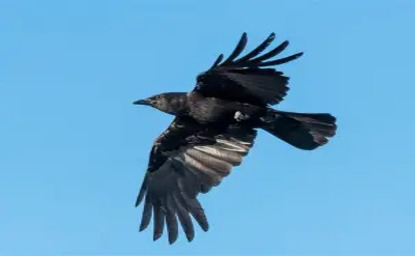
American Crows fly with steady, deliberate wingbeats. Their wings are broad, and their tails appear squared or slightly rounded when spread.
Unlike smaller blackbirds, crows have a heavier, more purposeful appearance in flight.
Recognizing Their Calls
One of the easiest ways to identify an American Crow is by listening for its familiar, harsh "caw-caw" calls.
Crows also produce quieter rattles, knocking sounds, and other vocalizations when communicating with family members or responding to potential danger.
American Crow vs. Common Raven
American Crows are sometimes confused with Common Ravens, particularly in northern Wisconsin, where both species occur.
Ravens are generally larger, with heavier bills, longer wings, and wedge-shaped tails. Their calls are usually deeper and more croaking than the familiar caw of an American Crow.
Crows typically have more squared tails and shorter, broader-looking wings.
Identification Tip
When observing a large black bird in Wisconsin, look at its overall size, bill shape, tail, flight pattern, and vocalizations. Combining these clues will help you distinguish an American Crow from ravens and other dark-colored birds.
Size and Appearance
The American Crow is a large, strongly built songbird with a sturdy body, broad wings, and a powerful bill. Its size and proportions help distinguish it from smaller blackbirds commonly found throughout Wisconsin.
Physical Measurements
- Length: 15.8–20.9 inches (40–53 cm)
- Wingspan: 33.5–39.4 inches (85–100 cm)
- Weight: 11.2–21.9 ounces (316–620 grams)
- Bill: Thick, strong, and slightly curved
- Tail: Medium-length, squared to slightly rounded
Body Shape and Features
American Crows have broad chests, strong legs, and sturdy feet. Their relatively heavy bills are useful for handling a wide variety of foods, from insects and seeds to nuts and small animals.
Their broad wings produce steady, deliberate wingbeats, while their squared or slightly rounded tails are helpful identification features when the birds are flying overhead.
Plumage and Seasonal Changes
Adult American Crows remain black throughout the year. Unlike birds such as the American Goldfinch, they do not undergo dramatic seasonal color changes.
However, feather wear, molting, and lighting conditions can affect their appearance. Fresh feathers may display glossy blue, purple, or greenish reflections, while worn feathers can appear duller or slightly brownish.
Size Comparison
American Crows are substantially larger than European Starlings, Common Grackles, and Red-winged Blackbirds.
Common Ravens are generally larger and heavier than American Crows, with longer wings, more substantial bills, and wedge-shaped tails.
Wisconsin Birding Tip
When comparing a crow with another large black bird, study its overall proportions rather than relying on color alone. The combination of a stout bill, broad wings, sturdy body, and squared tail provides useful identification clues.
Where to Look in Wisconsin.
The America Crow is one of Wisconsin's most adaptable birds, found in nearly every region of the state throughout the year. From northern forest communities to southern farmland and urban neighborhoods, crows thrive wherever suitable food sources and trees for nesting or roosting are available.
Unlike birds that require specialized habitats, American Crows are comfortable living near people. They frequently use a combination of open feeding areas and nearby trees for shelter, nesting, and observation.
Favorite Habitats
American Crows can be found in a wide variety of Wisconsin environments, including:
- Farmland and Open Fields: Agricultural fields, pastures, and rural roadsides provide excellent feeding opportunities.
- Woodlands and Forest Edges: Woodlots, oak woods, forest borders, and wooded corridors provide nesting sites and sheltered perches.
- City and County Parks: Parks with mature trees, lawns, and open spaces are common places to observe crows.
- Neighborhoods and Suburbs: Residential areas with trees, gardens, and nearby open spaces frequently support crow families.
- Rivers and Wetlands: Crows use river corridors, wooded shorelines, and marsh edges, particularly where feeding areas are nearby.
- Campgrounds and Recreation Areas: Campgrounds, picnic areas, and lakeside parks often attract crows.
Where to Look by Wisconsin Region
Northern Wisconsin: Look around towns, lake communities, forest edges, campgrounds, roadsides, and openings within wooded landscapes. During winter, crows may gather near communities where food is more readily available.
Northeastern Wisconsin: Farmland, wooded edges, river corridors, parks, and neighborhoods around Green Bay and other communities provide suitable habitat.
South Central Wisconsin: Crows are common in agricultural areas, parks, woodlots, river corridors, and residential neighborhoods. They can be observed throughout the year.
Southeastern Wisconsin: Urban and suburban parks, neighborhoods, wooded green spaces, lakefront parks, and farmland provide many opportunities to watch American Crows.
West Central Wisconsin: Look in river valleys, bluff-country farmland, oak woodlands, rural roadsides, pastures, and wooded communities.
Best Places to Watch
One of the easiest ways to find an American Crow is to visit a park or open field bordered by mature trees. Watch for birds walking across the ground, searching for food, or calling from exposed branches.
During winter, crows may gather in large communal roosts. Observing their evening movements toward these gathering places can be especially interesting.
Wisconsin Birding Tip
When exploring a new Wisconsin birding location, listen for the familiar "caw" of an American Crow. Its calls may lead you to a family group, an active feeding area, or other wildlife activity. If several crows begin calling excitedly, look carefully from a distance. They may be responding to a nearby hawk or owl.
Behavior to Notice
The American Crow is one of Wisconsin's most intelligent and observant birds. Its behavior reveals a remarkable ability to communicate, cooperate, solve problems, and adapt to changing surroundings. Watching crows closely can provide fascinating insights into how birds interact with one another and their environment.
Intelligence and Problem-Solving
American Crows are curious and resourceful. They investigate unfamiliar objects, remember potential threats, and find creative ways to obtain food.
Their adaptability allows them to thrive in both natural environments and areas heavily influenced by people. Watch how carefully a crow examines its surroundings before approaching something unfamiliar.
Social and Family Behavior
American Crows often live in family groups. Young birds may remain with their parents beyond their first year and sometimes help around nesting territories.
Family members communicate frequently and may cooperate when responding to potential threats. Their social relationships are more complex than those of many familiar backyard birds.
Mobbing Predators
One of the most noticeable crow behaviors is mobbing. When a crow discovers a hawk, owl, or another potential predator, it may begin calling loudly.
Other crows sometimes join the disturbance, surrounding or following the predator while producing excited calls.
For birdwatchers, a group of loudly calling crows can be a clue that a hawk or owl is nearby.
Communicating Through Calls
Although the familiar "caw" is the American Crow's best-known sound, these birds produce many different vocalizations.
Their calls include harsh alarms, softer contact sounds, rattles, and quieter notes used d
What It Eats
The American Crow is an omnivore, meaning it eats both plant and animal foods. Its remarkably varied diet is one reason it can survive in so many different Wisconsin habitats, from forests and farmland to city parks and suburban neighborhoods.
American Crows are opportunistic feeders. Rather than depending on one particular food source, they take advantage of whatever nutritious foods are available throughout the year.
Favorite Natural Foods
American Crows eat a wide variety of foods, including:
- Insects: Beetles, grasshoppers, caterpillars, and other insects found in fields, gardens, and woodlands.
- Earthworms and Other Invertebrates: Worms and other small creatures discovered while searching the ground.
- Grains and Seeds: Corn, waste grain, and seeds found in agricultural fields and open areas.
- Nuts and Acorns: Important food sources in wooded areas, particularly during fall.
- Fruits and Berries: Wild berries and other seasonal fruits.
- Small Animals: Occasionally small mammals, amphibians, reptiles, and other available prey.
- Carrion: Dead animals and roadkill, which crows help remove from the environment.
- Eggs and Nestlings: Occasionally taken from other birds' nests.
How Their Diet Changes with the Seasons
Spring: As temperatures rise, crows search for earthworms, insects, and other animal foods. They also consume available grains and plant material.
Summer: Insects, small animals, fruits, and other readily available foods become important. Crows frequently forage in fields, parks, and wooded areas.
Fall: Harvested agricultural fields provide corn and waste grain. Acorns, nuts, berries, and other seasonal plant foods are also valuable.
Winter: When insects become scarce, crows rely more heavily on grains, nuts, carrion, roadkill, and food sources associated with human activity.
How American Crows Find Food
American Crows are resourceful foragers. They walk across lawns, fields, and roadsides while carefully examining the ground for edible items.
Their strong bills allow them to pick up, probe, pull apart, and manipulate many kinds of food. They may investigate recently disturbed soil, search agricultural fields, or explore areas where food has become available.
Crows sometimes store food for later use, a behavior known as caching. They may hide food in soil, vegetation, or other concealed places and return to retrieve it.
Feeding Near People
American Crows frequently search for food in parks, neighborhoods, campgrounds, and other developed areas.
They may consume discarded human food, although feeding wildlife with processed foods is not recommended. Natural food sources provide a healthier diet and help reduce conflicts between birds and people.
Wisconsin Birding Tip
Watch American Crows in farm fields shortly after plowing or harvesting. These activities may expose insects, earthworms, spilled grain, and other foods.
You can also observe crows searching beneath oak trees for acorns or walking across open lawns after rainfall.
Pay attention to how a crow investigates and handles its food. Its feeding behavior can reveal remarkable patience, adaptability, and problem-solving ability.
Behavior to Notice
The American Crow is one of Wisconsin's most intelligent and observant birds. Its behavior reveals a remarkable ability to communicate, cooperate, solve problems, and adapt to changing surroundings. Watching crows closely can provide fascinating insights into how birds interact with one another and their environment.
Intelligence and Problem-Solving
American Crows are curious and resourceful. They investigate unfamiliar objects, remember potential threats, and find creative ways to obtain food.
Their adaptability allows them to thrive in both natural environments and areas heavily influenced by people. Watch how carefully a crow examines its surroundings before approaching something unfamiliar.
Social and Family Behavior
American Crows often live in family groups. Young birds may remain with their parents beyond their first year and sometimes help around nesting territories.
Family members communicate frequently and may cooperate when responding to potential threats. Their social relationships are more complex than those of many familiar backyard birds.
Mobbing Predators
One of the most noticeable crow behaviors is mobbing. When a crow discovers a hawk, owl, or another potential predator, it may begin calling loudly.
Other crows sometimes join the disturbance, surrounding or following the predator while producing excited calls.
For birdwatchers, a group of loudly calling crows can be a clue that a hawk or owl is nearby.
Communicating Through Calls
Although the familiar "caw" is the American Crow's best-known sound, these birds produce many different vocalizations.
Their calls include harsh alarms, softer contact sounds, rattles, and quieter notes used during interactions within family groups.
Pay attention to changes in calling intensity and behavior. Repeated, excited calls may signal that the birds have discovered something unusual.
Foraging and Food Storage
American Crows are opportunistic feeders. They search for food in fields, parks, roadsides, woodlands, and neighborhoods.
They may walk along the ground examining objects, pull apart food items, probe for insects, or investigate newly available food sources.
Crows also cache food, hiding items for later consumption.
Communal Winter Roosts
During fall and winter, American Crows may gather in large communal roosts, sometimes involving hundreds or thousands of birds.
These gatherings often occur in sheltered wooded areas or near towns and cities. Crows may travel considerable distances between daytime feeding locations and evening roosting sites.
Watching groups of crows arrive at a winter roost can be one of Wisconsin's more memorable birdwatching experiences.
What Birdwatchers Should Notice
The next time you encounter an American Crow, watch how it responds to its surroundings. Does it call to another bird, investigate an object, hide food, or interact with members of its family?
These everyday behaviors reveal why American Crows are such fascinating birds to observe, even in familiar Wisconsin neighborhoods.
When You Can See It in Wisconsin
American Crows can be found throughout Wisconsin year-round, making them one of the state's most familiar birds in every season. Although some individuals move seasonally, many remain in Wisconsin through even the coldest winter months.
Their behavior changes throughout the year as they establish nesting territories, raise families, search for seasonal foods, and gather in communal winter roosts.
Spring (March–May)
Spring brings increased courtship, territorial activity, and nest building. American Crows become more vocal as pairs establish nesting territories and defend them from potential threats.
Look for crows carrying sticks into trees, calling from prominent perches, or moving between feeding areas and nesting sites.
Spring is also a good time to observe crows mobbing hawks and owls that approach their nesting territories.
Summer (June–August)
During summer, American Crows are busy raising young and maintaining family relationships.
Young crows begin exploring their surroundings and learning to find food. Family members may travel together through neighborhoods, farm fields, parks, and woodland edges.
Listen for the begging calls of young birds and watch how adults interact with them.
Fall (September–November)
As temperatures cool, American Crows become more noticeable in agricultural fields and other areas where food is plentiful.
Harvested fields provide opportunities to feed on spilled grain, insects, and other available foods.
Crows may begin gathering in larger groups and traveling toward communal evening roosts.
Winter (December–February)
Many American Crows remain in Wisconsin throughout winter, although some migrate or shift their locations.
During colder months, crows may gather in large communal roosts, sometimes numbering hundreds or thousands of birds.
These roosts may occur near towns, cities, wooded river corridors, or other sheltered locations.
During the day, crows travel to feeding areas, returning toward their roosts as evening approaches.
Best Time of Year to Watch
American Crows offer interesting birdwatching opportunities during every season.
Spring is especially rewarding for observing nesting activity, territorial behavior, and courtship.
Summer provides opportunities to watch family groups and young birds learning to forage.
Fall and winter are excellent times to observe flocking behavior and the movement of crows toward communal roosts.
Wisconsin Birding Tip
During late fall and winter, watch the sky around sunset for groups of American Crows flying in the same direction.
These birds may be heading toward a communal roost. Observing their evening movements from a public park or other appropriate viewing location can provide a fascinating glimpse into their social behavior.
Nesting and Family Life
American Crows have fascinating family lives. Unlike many songbirds that separate from their parents shortly after leaving the nest, young American Crows may remain with their families for an extended period. These family groups sometimes cooperate in protecting nesting territories and caring for younger birds.
Throughout Wisconsin, American Crows typically begin nesting in spring, choosing trees that provide suitable support, protection, and access to nearby feeding areas.
Courtship and Pair Bonding
American Crows form long-lasting pair bonds. During the breeding season, pairs maintain territories, communicate through calls, and work together to prepare for nesting.
Courtship may involve close interactions, vocalizations, and coordinated movements between partners.
Nest Location and Construction
American Crows usually build their nests high in trees, often in woodlots, parks, farm groves, wooded river corridors, and established neighborhoods.
Their nests are large, sturdy structures made primarily from sticks and twigs. The interior is lined with softer materials such as grasses, moss, bark fibers, and other plant material.
Nest locations often provide a combination of shelter, visibility, and access to nearby feeding areas.
Eggs and Incubation
A typical American Crow clutch contains three to six eggs. The eggs are generally pale bluish-green or greenish with brown or gray markings.
Incubation lasts approximately 18 days. The female performs most of the incubation while the male helps provide food and defend the nesting area.
Other family members may also assist with protecting the territory.
Feeding and Raising the Young
After the eggs hatch, the nestlings depend on adults for warmth, protection, and food.
Parents bring a variety of foods to the nest, including insects, earthworms, and other suitable items.
Young American Crows generally remain in the nest for about four to five weeks before fledging.
After leaving the nest, they continue depending on adults while learning to find food, recognize danger, and communicate with other crows.
Family Helpers
One of the most remarkable aspects of American Crow behavior is cooperative family care.
Young crows may remain with their parents beyond their first year. Some help defend nesting territories, warn of predators, or assist with feeding younger siblings.
These extended family relationships provide opportunities to observe cooperation among birds.
Wisconsin Birding Tip
During spring and early summer, watch for crows carrying sticks into trees or repeatedly visiting the same wooded area.
Later in summer, listen for the begging calls of young crows and observe family groups searching for food.
Always watch from a respectful distance. Avoid approaching active nests or disturbing young birds while they're learning to navigate their surroundings.
Conservation and Challenges
The Amican Crow is a common and widespread bird throughout Wisconsin and much of North America. Its intelligence, adaptability, and varied diet allow it to thrive in many environments, including forests, farmland, parks, and urban neighborhoods.
Although American Crows remain widespread, they face several environmental challenges that can affect their health and survival.
Population and Conservation Status
American Crows are generally common throughout Wisconsin and are not considered globally threatened. Their ability to use both natural and human-altered habitats helps them maintain populations across a wide geographic area.
However, local populations can be affected by disease, habitat changes, food availability, and conflicts with people.
West Nile Virus and Disease
West Nile virus is a significant threat to American Crows. They are particularly susceptible to the disease, which has caused substantial crow mortality in North America.
Disease outbreaks can reduce local populations even where suitable habitat and food remain available.
Collisions and Human-Related Hazards
American Crows frequently forage along roadsides and in developed areas, where they may encounter vehicles and other hazards.
They can also be exposed to lead and other toxins through contaminated food sources.
Because crows sometimes feed on agricultural crops, garbage, and human food scraps, conflicts with people may result in harassment or persecution.
Habitat and Nesting Challenges
American Crows benefit from landscapes that combine open feeding areas with mature trees for nesting, roosting, and shelter.
The loss of suitable trees, changes in agricultural landscapes, and disturbance near nesting or communal roosting areas can affect local crow populations.
Eggs and young crows may also be vulnerable to predators and severe weather.
How People Can Help
There are several ways Wisconsin residents can support American Crows and other wildlife:
- Protect Mature Trees: Preserve suitable nesting and roosting trees whenever possible.
- Reduce Exposure to Toxins: Dispose of hazardous materials properly and avoid leaving contaminated food sources accessible to wildlife.
- Drive Carefully Near Wildlife: Watch for birds feeding along roadsides, especially near agricultural fields.
- Respect Active Nests: Observe nesting birds from a distance without disturbing adults or young.
- Keep Natural Areas Healthy: Support the protection of woodlands, river corridors, parks, and other habitats used by birds.
- Avoid Feeding Processed Foods: Allow crows to rely on natural food sources rather than encouraging dependence on human scraps.
Wisconsin Birding Tip
American Crows can help birdwatchers understand the health and activity of their local environment.
Observe how they use wooded areas, agricultural fields, parks, and neighborhoods throughout the year. Their behavior can provide interesting clues about food availability, seasonal changes, and interactions among wildlife.
If you discover a sick or dead crow, avoid handling it with bare hands. Contact your local health department or wildlife agency for guidance when appropriate.
Tips for Birdwatchers
American Crows are excellent birds to observe because they are widespread, active throughout the year, and remarkably intelligent. Whether you're exploring a Wisconsin nature preserve, walking through a neighborhood, or watching birds from your backyard, there are many opportunities to discover their fascinating behaviors.
1. Listen for Their Familiar Calls
The American Crow's loud, harsh "caw-caw" is one of the easiest bird sounds to recognize.
Listen for repeated calls from treetops, farm fields, and wooded areas. When several crows begin calling loudly together, they may be responding to a hawk, owl, or another potential threat.
2. Watch for Their Distinctive Flight
American Crows usually fly with steady, deliberate wingbeats and a direct flight path.
Look for their broad wings, sturdy bodies, and squared or slightly rounded tails. These features can help distinguish crows from Common Ravens, particularly in northern Wisconsin.
3. Explore Open Areas Near Trees
Some of the best places to observe American Crows are open fields, parks, farmland, and woodland edges.
Crows frequently search for food on the ground while using nearby trees as lookout perches, nesting sites, and sheltered resting places.
4. Observe Their Social Behavior
American Crows often travel in pairs, family groups, or larger flocks.
Watch how they communicate, cooperate while searching for food, and respond to possible threats. Their interactions can reveal surprisingly complex social relationships.
5. Look for Winter Roosts
During fall and winter, American Crows may gather in large communal roosts.
Watch for groups flying in the same direction toward evening. These birds may be traveling from daytime feeding areas to a shared nighttime roost.
Observing these movements from a public park or other appropriate location can be a memorable birdwatching experience.
6. Compare Crows with Ravens
Where American Crows and Common Ravens occur together, take time to compare their appearance and behavior.
Ravens are generally larger, with heavier bills, longer wings, and wedge-shaped tails. Their calls are often deeper and more croaking than those of American Crows.
Comparing these features can help improve your identification skills.
7. Watch How They Find Food
American Crows are resourceful feeders that investigate many different food sources.
Look for them searching agricultural fields, examining the ground after rainfall, collecting acorns, or exploring newly disturbed soil.
Pay attention to how they handle objects and respond to changes in their surroundings.
8. Observe Without Disturbing Them
American Crows can be cautious around unfamiliar people, particularly near nesting territories.
Use binoculars to observe them from a comfortable distance. Avoid approaching active nests, disturbing communal roosts, or offering processed human foods.
Quiet observation often reveals more natural behavior.
A Birding Detective Tip
The next time you see an American Crow, spend a few minutes watching what it does rather than
Interesting Facts About the American Crow.
The American Crow is far more than a familiar black bird calling from the treetops. Its intelligence, remarkable memory, strong family relationships, and adaptable behavior make it one of Wisconsin's most fascinating birds.
1. American Crows Are Remarkably Intelligent
American Crows belong to the corvid family, which also includes ravens, jays, and magpies. These birds are known for their problem-solving abilities, curiosity, and complex behavior.
Crows can investigate unfamiliar objects, recognize patterns, and learn from their experiences.
2. They Have Excellent Memories
American Crows can remember potential threats and recognize familiar situations. Their ability to learn from previous encounters helps them respond to danger and adapt to changing environments.
3. Crow Families Often Stay Together
Unlike many songbirds that separate from their parents after fledging, young American Crows may remain with their families for an extended period.
Some young birds help defend nesting territories or assist with caring for younger siblings.
4. They Work Together Against Predators
When American Crows discover a hawk, owl, or another potential predator, they may begin calling loudly and gathering nearby.
This behavior, known as mobbing, can involve several crows following or surrounding the predator while sounding alarm calls.
5. They Gather in Large Winter Roosts
During fall and winter, American Crows sometimes gather in communal roosts containing hundreds or even thousands of birds.
These gatherings may occur near cities, wooded river corridors, or sheltered natural areas.
6. Their Black Feathers Can Be Surprisingly Colorful
Although American Crows appear entirely black, their feathers can reflect shades of blue, purple, or green when sunlight strikes them at certain angles.
These subtle colors are easiest to notice when a crow is perched in bright natural light.
7. They Store Food for Later
American Crows sometimes hide food in soil, vegetation, or other concealed locations.
This behavior, called caching, allows them to save food for later consumption and demonstrates their resourcefulness.
8. They Have More Than One Kind of Call
The familiar "caw-caw" is only part of the American Crow's vocal repertoire.
Crows also produce rattles, softer contact calls, alarm sounds, and other vocalizations when communicating with family members or responding to their surroundings.
A Birding Detective Observation
The next time you encounter an American Crow, watch how it interacts with other birds and its surroundings. Its behavior may reveal something unexpected, from careful problem-solving to cooperation among family members.
Even a familiar neighborhood crow can provide a fascinating birdwatching experience when you take the time to observe it closely.
Final Thoughts on the American Crow
The American Crow is one of Wisconsin's most familiar birds, yet it is also one of the most fascinating to observe. Its intelligence, strong family relationships, remarkable adaptability, and distinctive calls make it an important part of Wisconsin's birdlife.
Whether you're exploring a woodland trail, visiting a local park, walking through a neighborhood, or watching birds in your own backyard, American Crows offer opportunities for discovery throughout the year.
Their behavior tells a story that goes far beyond their familiar black feathers and loud calls. Watch how they communicate with family members, respond to potential dangers, search for food, and adapt to changes in their surroundings.
The next time you encounter an American Crow, spend a few moments observing its behavior. You may discover something surprising about a bird you've seen hundreds of times before.
At Birding Detective, we believe every bird has a story worth discovering. Keep exploring Wisconsin's natural places, noticing the details, and connecting with the remarkable birds that share our world.
Explore. Notice. Connect.