American Goldfinch
Listen to the American Goldfinch
Scientific Name: Spinus tristis
Family: Fringillidae — Finches
introduction / Overview
During spring and summer, males display brilliant yellow plumage, contrasting black wings, and a distinctive black cap. Females are more subdued, with soft yellow and olive-brown coloring. In winter, both sexes wear duller plumage that helps them blend into their surroundings.
Often seen in backyards, open fields, gardens, and meadows, American Goldfinches are especially fond of seeds from thistles, sunflowers, and native wildflowers. Their cheerful calls and distinctive bouncing flight make them a delight to watch and listen to.
Unlike many Wisconsin songbirds, American Goldfinches nest relatively late in summer, often waiting until July or August when seed-producing plants are abundant. They can be found throughout Wisconsin year-round, making them a rewarding bird to observe in every season.
How to Recognize It
The American Goldfinch is a small, active songbird with a short, cone-shaped bill, a relatively short tail, and a distinctive bouncing flight pattern. Its appearance changes noticeably with the seasons, making it important to recognize more than just its bright yellow coloring.
Breeding Male (Spring and Summer)
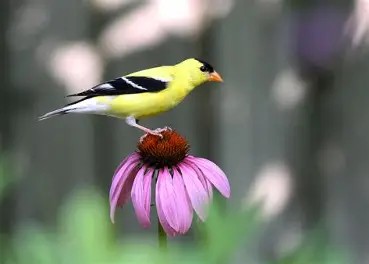
During breeding season, the male American Goldfinch is unmistakable. Its body is brilliant lemon-yellow, with a contrasting black forehead, black wings marked with white bars, and a black tail with white markings. Its bill becomes bright orange during the breeding season.
Female American Goldfinch
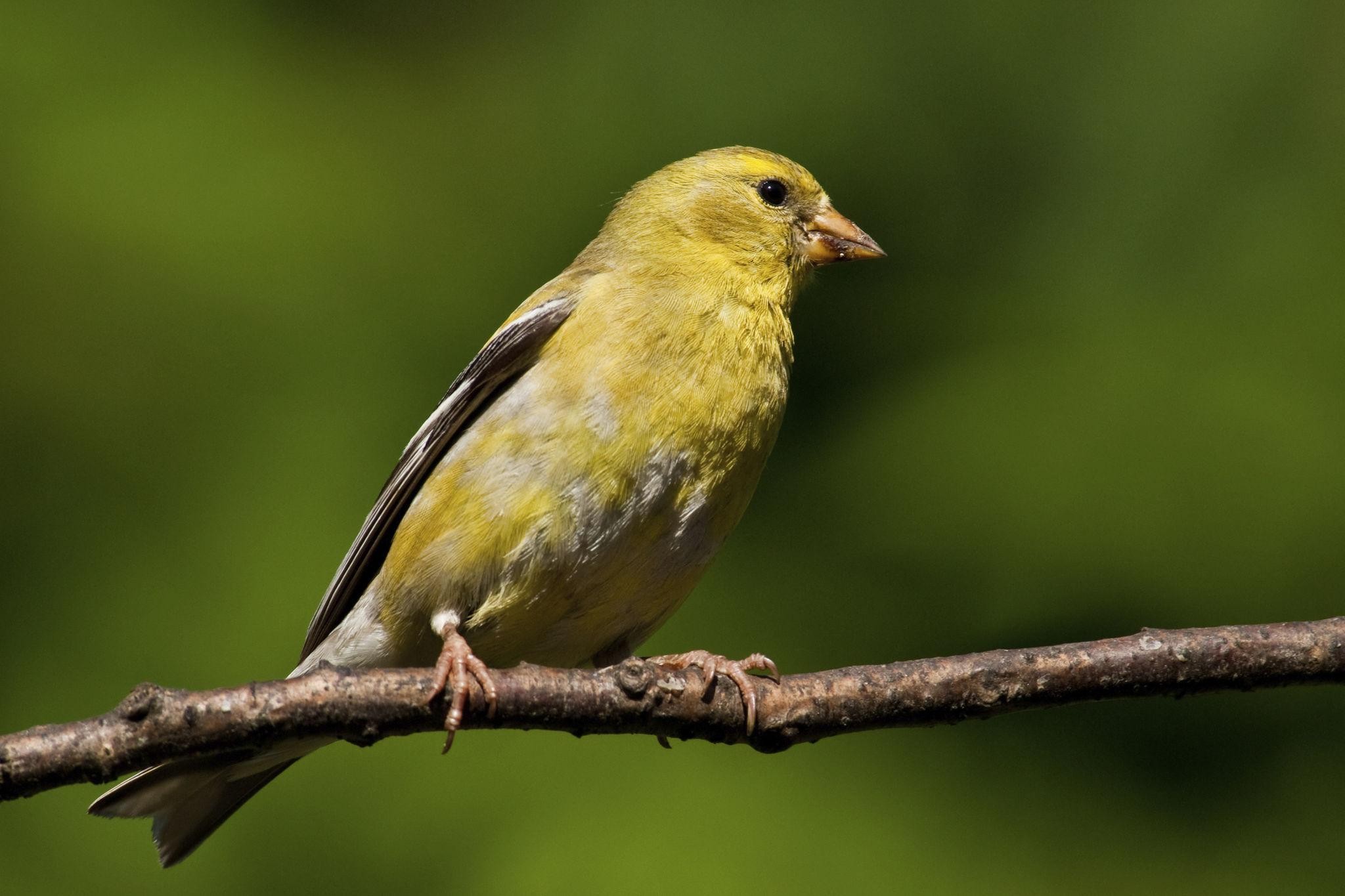
Females have a softer appearance, with olive-yellow upperparts, pale yellow underparts, and dark wings featuring white wing bars. Unlike breeding males, females lack the distinctive black forehead.
Winter Appearance
In fall, American Goldfinches molt into their nonbreeding plumage. Males lose their brilliant yellow coloring and become duller, with brownish or olive tones. Both sexes appear more subdued during winter, although their dark wings and pale wing bars remain useful identification clues.
Flight and Movement
One of the easiest ways to recognize an American Goldfinch is by its distinctive undulating flight. As it flies, the bird rises and falls in a gentle, wave-like pattern, often giving a series of cheerful calls that sound like "po-ta-to-chip."
Identification Tip
Look for a small finch with a pointed, cone-shaped bill, dark wings with pale wing bars, and an energetic, bouncing flight. Even when its bright summer colors are gone, these features can help distinguish the American Goldfinch from other Wisconsin songbirds.
Size and Appearance
Physical Measurements
- Length: 4.3–5.1 inches (11–13 cm)
- Wingspan: 7.5–8.7 inches (19–22 cm)
- Weight: 0.4–0.7 ounces (11–20 grams)
- Bill: Short, pointed, and cone-shaped
- Tail: Short to medium-length with a slightly notched tip
Body Shape and Features
American Goldfinches have relatively small heads, short necks, and compact bodies. Their pointed bills are well suited for extracting seeds from thistles, sunflowers, and other seed-producing plants.
Their wings are dark with distinctive white markings, while their tails are blackish with white edging. These contrasting features remain helpful for identification even when the birds lose their bright summer coloring.
Seasonal Changes
One of the American Goldfinch's most interesting characteristics is its dramatic seasonal color change. Breeding males are brilliant yellow with black caps, while winter males become much duller, resembling the olive-brown females. This transformation occurs through seasonal molts rather than a gradual fading of the feathers.
Size Comparison
An American Goldfinch is noticeably smaller than an American Robin and is similar in length to a Black-capped Chickadee, although its body shape and proportions are different.
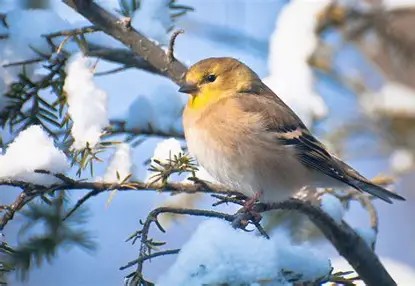
American Goldfinches exchange their bright summer colors for more subdued plumage in winter.
Where to Look in Wisconsin.
The American Goldfinch is found throughout Wisconsin, from the forests and open fields of the north to the gardens, prairies, and parks of the south. Although it can be seen year-round, its preferred locations change somewhat with the seasons and the availability of seeds.
Favorite Habitats
American Goldfinches prefer open areas with abundant seed-producing plants. Some of the best places to look include:
- Prairies and Wildflower Meadows: Native wildflowers, especially coneflowers, asters, and thistles, provide valuable food sources.
- Grasslands and Old Fields: Weedy fields and open countryside offer plentiful seeds and suitable nesting habitat.
- Woodland Edges: Goldfinches frequently visit the boundaries between woods and open fields, where trees provide resting and nesting places.
- Parks and Nature Preserves: Trails through meadows, restored prairies, and open natural areas offer excellent viewing opportunities.
- Backyards and Gardens: Goldfinches readily visit gardens with sunflowers, coneflowers, and other seed-producing flowers, as well as feeders offering nyjer or sunflower seeds.
Where to Look by Wisconsin Region
Northern Wisconsin: Look along woodland edges, forest clearings, roadsides with wildflowers, and open meadows. Goldfinches are especially noticeable where seed-producing plants grow near shrubs and scattered trees.
Northeastern Wisconsin: Farmland edges, grasslands, lakeside parks, and restored prairie areas provide suitable habitat throughout the region.
Central and Western Wisconsin: Open fields, prairie restorations, river valleys, and wildflower-rich grasslands are excellent places to search.
Southern and Southeastern Wisconsin: Look in prairie preserves, suburban gardens, parklands, and natural areas featuring native flowers and grasses.
Best Places to Watch
One of the easiest ways to find an American Goldfinch is to locate a patch of blooming or seed-producing wildflowers. Watch for small birds balancing on flower stems while extracting seeds, often calling to one another as they move through the vegetation.
Goldfinches are particularly enjoyable to observe in late summer, when adults and recently fledged young may gather around abundant seed sources.
Wisconsin Birding Tip
Bring binoculars and spend a few minutes watching patches of coneflowers, thistles, or sunflowers. You may spot a goldfinch feeding quietly before you hear its distinctive flight calls. In winter, check weedy fields and backyard feeders for small flocks wearing their more subdued plumage.
Behavior to Notice
The American Goldfinch is an active, social songbird whose movements and behavior can be just as distinctive as its colorful plumage. Whether flying over a Wisconsin meadow or feeding among backyard flowers, goldfinches display several fascinating behaviors worth watching.
A Distinctive Bouncing Flight
One of the easiest ways to recognize an American Goldfinch is by its undulating flight pattern. The bird alternates between flapping its wings and briefly folding them against its body, creating a gentle, wave-like movement through the air.
Goldfinches often give their familiar "po-ta-to-chip" flight calls as they travel overhead, making them recognizable even when they're too far away to see clearly.
Acrobatic Feeding
American Goldfinches are remarkably agile when feeding. They frequently cling to slender flower stems, sometimes hanging upside down to reach seeds.
Watch them balancing on thistles, coneflowers, and sunflowers while carefully extracting seeds with their short, pointed bills.
Social and Flocking Behavior
Outside the breeding season, American Goldfinches often gather in small flocks. These groups may travel together between feeding areas, communicating through soft calls.
During winter, goldfinches sometimes join mixed flocks with other small seed-eating birds, such as Pine Siskins.
An Unhurried Nesting Season
Unlike many Wisconsin songbirds that begin nesting in spring, American Goldfinches typically wait until midsummer.
Their late breeding season coincides with the abundance of seeds from thistles and other wildflowers, which provide important food for adults and their developing young.
What Birdwatchers Should Notice
When observing an American Goldfinch, pay attention to its bouncing flight, cheerful calls, and ability to balance on delicate flower stems.
These behaviors offer valuable identification clues, especially during fall and winter when the bird's bright yellow breeding plumage is less noticeable.
What It Eats
The American Goldfinch is primarily a seed-eating bird, relying on a variety of wildflowers, grasses, and other seed-producing plants throughout the year. Its short, cone-shaped bill is specially adapted for extracting seeds, making it an efficient and surprisingly acrobatic feeder.
Favorite Natural Foods
American Goldfinches eat seeds from many plants commonly found in Wisconsin, including:
- Thistles: One of their favorite natural food sources. Goldfinches skillfully extract seeds from mature thistle heads.
- Sunflowers: Both wild and cultivated sunflowers provide nutritious, oil-rich seeds.
- Coneflowers: Purple coneflowers and other native wildflowers attract goldfinches when their seed heads mature.
- Asters and Goldenrods: These late-season wildflowers provide additional seeds during fall and winter.
- Dandelions: Goldfinches frequently feed on the seeds of these familiar lawn and field plants.
- Birch and Alder Trees: Their small seeds provide important food, particularly during colder months.
Feeding at Backyard Bird Feeders
American Goldfinches readily visit backyard feeders, especially those offering:
- Nyjer (Thistle) Seed: A popular choice for attracting goldfinches, particularly when offered in specialized finch feeders.
- Sunflower Chips: Hulled sunflower seeds are easy for goldfinches to eat and produce little mess.
- Black-Oil Sunflower Seeds: Another nutritious food that goldfinches may readily accept.
Tube feeders with small feeding ports and mesh feeders designed for finches are particularly effective. Goldfinches are also comfortable using feeders where they must cling to narrow perches.
How Goldfinches Feed
Goldfinches often perch directly on seed-producing plants, using their feet to grip slender stems while pulling seeds from flower heads.
They may hang sideways or upside down to reach food, making them entertaining birds to observe in a garden or meadow.
What About Insects?
Unlike many songbirds, American Goldfinches eat relatively few insects. Their diet consists overwhelmingly of seeds, although they occasionally consume small insects.
Even their nestlings receive a largely seed-based diet, which is unusual among North American songbirds.
Wisconsin Backyard Birding Tip
Plant native sunflowers, purple coneflowers, and other seed-producing wildflowers to create a natural feeding area for goldfinches.
Leave some flower heads standing through fall and winter rather than cutting everything back. These plants provide valuable food for goldfinches and other seed-eating birds long after the flowers have finished blooming.
When You Can See It in Wisconsin
The American Goldfinch is a year-round resident in much of Wisconsin, although its numbers and movements vary with the seasons. These cheerful little birds can be found in backyards, parks, prairies, and open countryside throughout the year.
One of the most fascinating things about American Goldfinches is how dramatically their appearance changes between summer and winter. Understanding these seasonal differences makes them easier to recognize during any Wisconsin birding outing.
Spring (March–May)
As Wisconsin begins to warm, male American Goldfinches gradually replace their dull winter feathers with brilliant yellow breeding plumage and a distinctive black forehead.
Spring is an excellent time to watch goldfinches visiting backyard feeders and searching for seeds in fields and gardens. By late spring, the males are especially colorful and easy to identify.
Summer (June–August)
Summer is one of the best seasons to observe American Goldfinches in their brightest colors.
They are frequently found in wildflower meadows, prairie restorations, gardens, and other open habitats where seed-producing plants are abundant.
Unlike many songbirds, goldfinches usually begin nesting in midsummer, often during July or August. Their nesting season coincides with the availability of thistle down for nest construction and abundant seeds for feeding their young.
Fall (September–November)
During fall, male American Goldfinches gradually lose their bright yellow breeding plumage and develop the more subdued olive-brown colors of winter.
Goldfinches often gather in small flocks and move between fields, woodland edges, and backyard feeders in search of seeds.
Fall is an excellent time to practice identifying these birds without relying on their familiar summer colors.
Winter (December–February)
American Goldfinches remain in many parts of Wisconsin throughout winter, although some individuals move farther south and others arrive from more northern breeding areas.
Their winter plumage is considerably duller, with brownish or olive tones, dark wings, and pale wing bars.
Look for small flocks feeding on seeds in weedy fields, along woodland edges, and at backyard feeders stocked with nyjer or sunflower seeds.
Best Time of Year to Watch
American Goldfinches can be rewarding to observe during every season, but late spring through summer is especially enjoyable because males display their brilliant breeding colors.
Late summer and early fall are excellent for watching goldfinches feeding on mature wildflower seed heads and observing their social behavior.
Wisconsin Birding Tip
Don't assume goldfinches have disappeared when their bright yellow coloring fades in fall. Watch for their distinctive bouncing flight, pale wing bars, and cheerful calls. These characteristics can help you recognize American Goldfinches even in the middle of a Wisconsin winter.
Nesting and Family Life
American Goldfinches are among Wisconsin's latest-nesting songbirds. While many birds begin raising their families in spring, goldfinches typically wait until July or August, when thistles, wildflowers, and other seed-producing plants become plentiful.
This delayed nesting season provides abundant food for growing chicks and gives goldfinches access to soft plant fibers and thistle down for nest construction.
Courtship and Pair Bonding
During late spring and early summer, male American Goldfinches display their brilliant yellow breeding plumage and perform energetic courtship flights.
Males often pursue females through the air while singing and calling. Once a pair forms, the birds may fly together in a graceful, undulating pattern accompanied by cheerful vocalizations.
Nest Location and Construction
Female American Goldfinches usually build their nests in shrubs or trees, often placing them in the fork of several branches for support.
Their nests are small, tightly woven cups constructed from plant fibers, grasses, and strips of bark. Soft materials such as thistle down and other plant fluff line the interior, creating a comfortable space for eggs and developing chicks.
Goldfinch nests are built so tightly that they can sometimes hold rainwater, although this may create problems during heavy storms.
Eggs and Incubation
A typical American Goldfinch clutch contains four to six pale bluish-white eggs.
The female incubates the eggs for approximately 12–14 days while the male helps supply food.
During this period, the female spends much of her time on the nest, protecting the developing eggs.
Feeding and Raising the Young
After hatching, young goldfinches receive a diet consisting primarily of regurgitated seeds, an unusual feeding strategy among North American songbirds.
The male initially provides much of the food while the female cares for the nestlings. As the young grow, both parents participate in feeding them.
Young goldfinches generally leave the nest about 11–17 days after hatching, although their parents continue providing food for a period afterward.
How Many Broods?
American Goldfinches generally raise one brood per breeding season in Wisconsin. If an early nesting attempt fails, a pair may try again while conditions remain favorable.
Wisconsin Birding Tip
During July and August, watch for goldfinches carrying soft nesting material or making repeated trips to shrubs and small trees.
Observe quietly from a distance and avoid approaching active nests. You can enjoy their family activities without disturbing the birds or their young.
Tips for Birdwatchers.
American Goldfinches are wonderful birds for both beginning and experienced birdwatchers. Their cheerful calls, colorful plumage, and active feeding habits make them especially enjoyable to observe in Wisconsin's gardens, parks, and natural areas.
Here are several ways to improve your chances of finding and watching these lively little finches.
1. Look for Seed-Producing Wildflowers
One of the best ways to find American Goldfinches is to visit areas with plenty of thistles, sunflowers, coneflowers, and other seed-producing plants.
During late summer and fall, watch for goldfinches balancing on flower stems while extracting seeds. Prairie restorations, wildflower meadows, and naturalized gardens are excellent places to search.
2. Listen for Their Distinctive Calls
American Goldfinches frequently announce their presence with cheerful, musical calls.
Their familiar flight call is often described as sounding like "po-ta-to-chip," with the notes following the rhythm of their bouncing flight.
Listen carefully when small birds fly overhead. You may recognize a goldfinch by its call before you spot it.
3. Watch for Their Bouncing Flight
Goldfinches have a distinctive undulating flight pattern. They alternate between flapping their wings and briefly gliding with their wings folded, creating a gentle rising-and-falling motion.
This behavior is especially helpful for identifying goldfinches at a distance or during winter when their bright yellow coloring has faded.
4. Visit Backyard Feeders
American Goldfinches readily visit feeders offering nyjer seed, sunflower chips, or black-oil sunflower seeds.
A clean finch feeder placed near shrubs or trees can provide excellent viewing opportunities. Keep feeders clean and replace damp or spoiled seed promptly to help protect visiting birds.
5. Learn Their Seasonal Appearance
Don't rely entirely on bright yellow plumage when identifying American Goldfinches.
Breeding males are brilliant yellow and black, but both sexes become much more subdued during fall and winter.
Look for their small size, conical bills, dark wings, pale wing bars, and characteristic bouncing flight pattern throughout the year.
nteresting Facts About the American Goldfinch
The American Goldfinch is more than just a beautiful yellow songbird. Its unusual nesting habits, seasonal color changes, and remarkable ability to survive on seeds make it one of Wisconsin's most fascinating backyard birds.
1. Sometimes Called the Wild Canary
The American Goldfinch is often nicknamed the "wild canary" because of the male's brilliant yellow coloring and cheerful, musical song. Despite the nickname, it is a true finch rather than a canary.
2. It Changes Color with the Seasons
Male American Goldfinches are bright yellow during the breeding season but become much duller in winter. Unlike most North American finches, goldfinches undergo two complete molts each year, replacing their feathers in spring and fall.
3. One of Wisconsin's Latest-Nesting Songbirds
While many birds begin nesting in spring, American Goldfinches usually wait until July or August. Their late nesting season coincides with the abundance of seeds and soft plant fibers used for nest construction.
4. Young Goldfinches Eat Mostly Seeds
Most songbirds feed their nestlings insects because they provide protein needed for growth. American Goldfinches are unusual because they feed their young a diet consisting primarily of regurgitated seeds.
5. They Can Feed Upside Down
Goldfinches are exceptionally agile feeders. They can cling to slender stems and sometimes hang upside down while extracting seeds from thistles, sunflowers, and other plants.
6. Their Flight Has a Musical Rhythm
American Goldfinches fly in a distinctive bouncing pattern, alternating wingbeats with brief periods of folded-wing flight. Their familiar "po-ta-to-chip" call often accompanies this undulating movement.
7. They Stay in Wisconsin During Winter
Although some American Goldfinches move south during colder months, many remain in Wisconsin throughout winter. Their subdued winter plumage makes them less noticeable, but they can still be found in weedy fields, woodland edges, and backyard feeding areas.
A Birding Detective Observation
The American Goldfinch reminds us that identifying birds involves more than recognizing their colors. Their sounds, movements, feeding habits, and seasonal changes all provide important clues for understanding these remarkable little songbirds.
Final Thoughts on the American Goldfinch
The American Goldfinch is one of Wisconsin's most delightful and recognizable songbirds. From its brilliant yellow summer plumage to its quieter winter appearance, this small finch offers something interesting to discover in every season.
Whether you're exploring a prairie, walking through a nature preserve, or watching birds in your own backyard, American Goldfinches reward careful observation. Their cheerful calls, bouncing flight, and remarkable ability to balance on wildflower stems make them fascinating birds to watch.
The next time you encounter an American Goldfinch, take a moment to notice more than its color. Listen to its calls, observe its movements, and watch how it interacts with its surroundings. Every observation offers another clue about the natural world around us.
At Birding Detective, we believe that discovering Wisconsin's birds begins with curiosity. Keep exploring, keep noticing, and enjoy every connection you make with nature.