Bald Eagle
Listen to the Bald Eagle
Scientific Name: Haliaeetus leucocephalus
Family: Accipitridae (Hawks, Eagles, and Kites)
By Les Miller
introduction/overview
The Bald Eagle (Haliaeetus leucocephalus) is one of Wisconsin's most impressive birds of prey and a symbol of America's wildlife heritage. Recognized by its white head and tail, dark brown body, and powerful yellow bill, this large eagle often soars above rivers, lakes, and wetlands. Wisconsin's waterways provide excellent feeding and nesting habitat, making the state an increasingly rewarding place to observe Bald Eagles. Whether perched high in a riverside tree or gliding overhead on broad wings, a Bald Eagle is an unforgettable sight for birders of all experience levels.
How to Identify the Bald Eagle
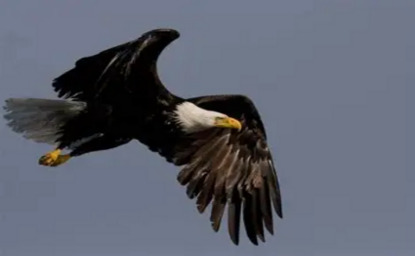
The Bald Eagle is one of Wisconsin's largest birds of prey, measuring approximately 28–40 inches long with an impressive wingspan of 6–7.5 feet. Adult Bald Eagles are easily recognized by their bright white heads and tails, dark brown bodies, powerful yellow bills, and yellow legs.
Young Bald Eagles look quite different from adults. Juveniles are mostly brown, often with irregular white markings on their wings and bodies. It typically takes about four to five years for them to develop the familiar white head and tail. Their large size, heavy bills, and broad wings help distinguish them from hawks and other large birds.
In flight, Bald Eagles hold their broad wings nearly flat while soaring, with feathered wingtips that resemble spread fingers. They often circle high above rivers and lakes or perch in tall trees overlooking the water. When identifying a distant eagle, look for its large head, broad wings, and relatively short, wedge-shaped tail.
Sounds and Behavior
Despite their impressive size, Bald Eagles have surprisingly high-pitched voices. Their calls consist of sharp whistles, chirps, and chattering notes rather than the deep, powerful screams often heard in movies. Eagles use these vocalizations to communicate with mates, defend territories, and interact near their nests.
Bald Eagles are skilled hunters and opportunistic scavengers. They frequently perch in tall trees overlooking rivers or lakes, watching for fish near the water's surface. They may swoop down to grasp fish with their powerful talons, steal food from other birds, or feed on carrion.
In Wisconsin, Bald Eagles are especially noticeable during winter when they gather near open water along major rivers. Watching an eagle soar on broad wings, circle above a lake, or perch quietly in a riverside tree offers birders an excellent chance to observe this remarkable raptor's behavior.
Habitat and Diet
Bald Eagles are found throughout Wisconsin, particularly near large lakes, rivers, reservoirs, and wetlands where fish and other food sources are plentiful. They favor areas with tall trees for perching and nesting, often selecting locations that provide an unobstructed view of nearby water.
Fish make up much of the Bald Eagle's diet, but these powerful birds are opportunistic feeders. They also eat waterfowl, small mammals, and carrion, including dead fish and other animals. Bald Eagles sometimes steal fish from Ospreys or other birds rather than catching their own prey.
In Wisconsin, river corridors and lakeshores provide excellent opportunities to observe feeding Bald Eagles. During winter, they frequently gather near stretches of open water, where fish remain accessible even when surrounding lakes are frozen. Watching an eagle swoop toward the water and capture a fish with its powerful talons is an unforgettable birding experience.
When and Where to Find Bald Eagles in Wisconsin
Bald Eagles can be seen throughout Wisconsin year-round, although their numbers and locations change with the seasons. During spring and summer, breeding pairs are often found near large lakes, rivers, and forested shorelines. Winter brings additional eagles from farther north, especially to areas where moving water remains free of ice.
Some of Wisconsin's best Bald Eagle viewing locations include the Wisconsin River near Prairie du Sac and Sauk City, the Mississippi River near La Crosse and Prairie du Chien, and the Upper Mississippi River National Wildlife and Fish Refuge. Northern Wisconsin's forested lakes and river corridors also provide excellent opportunities to see nesting and feeding eagles during the warmer months.
Winter is particularly rewarding for eagle watching because birds often gather near dams and stretches of open water where fish remain available. Look for eagles perched in tall riverside trees or soaring above the water. Early mornings can be productive, especially near feeding areas. Bring binoculars or a spotting scope, observe from public viewing areas, and keep a respectful distance from nesting and roosting birds.
Nesting and Family Life
Bald Eagles build some of the largest nests of any North American bird. In Wisconsin, nesting pairs usually select tall, sturdy trees near lakes, rivers, or other large bodies of water. They build nests from large sticks and line them with softer materials, including grasses and pine needles. Pairs often reuse the same nest for several years, adding new materials each season until it becomes enormous.
Bald Eagles begin nesting early in Wisconsin, sometimes displaying courtship and repairing nests during the winter months. Females usually lay one to three eggs, most often two, and both parents help incubate them for approximately 35 days. After hatching, the eaglets remain in the nest for about 10 to 12 weeks while their parents provide food and protection.
Young Bald Eagles depend on their parents for some time after leaving the nest as they develop their flying and hunting skills. Nesting eagles are sensitive to disturbance, so birders should observe from a respectful distance using binoculars or spotting scopes. Watching an eagle family from a safe viewing location can be one of Wisconsin's most memorable wildlife experiences.
Observing Bald Eagles in Wisconsin
iObserving Bald Eagles is one of the most exciting birding experiences Wisconsin has to offer. These impressive raptors can be spotted soaring above rivers, perched in tall shoreline trees, or hunting for fish near open water. Their large size and broad wings make them relatively easy to recognize, even from a distance.
For the best viewing opportunities, visit rivers, lakeshores, and wildlife refuges where Bald Eagles regularly feed and rest. Winter is especially rewarding along the Wisconsin and Mississippi rivers, where eagles gather near stretches of open water. Scan the treetops and skies with binoculars, and watch for the distinctive white head and tail of adult birds. Remember that younger Bald Eagles are mostly brown and may not develop their familiar adult plumage for several years.
Always observe Bald Eagles from a respectful distance, particularly around nesting areas and winter roosts. Use binoculars or a spotting scope instead of approaching closely, and avoid activities that cause birds to leave their perches or nests. With patience and careful observation, Wisconsin birders can enjoy memorable encounters with our national bird year-round.