barred owl
Listen to the Barred Owl
Scientific Name: Strix varia
Family: Strigidae (Typical Owls)
By Les Miller
introduction/overview
The Barred Owl is one of Wisconsin’s most recognizable woodland owls. With its rounded head, dark eyes, and distinctive series of hooting calls, this year-round resident is often heard before it is seen. Barred Owls favor mature forests, particularly those near rivers, swamps, and wooded wetlands. Although primarily active at night, they may also appear during daylight hours, giving patient birdwatchers an opportunity to observe this fascinating bird of prey.
How to Identify the Barred Owl
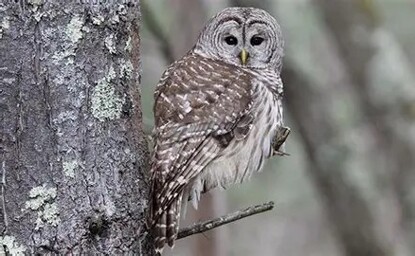
The Barred Owl is a large, broad-winged owl with a rounded head, no ear tufts, and striking dark brown eyes. Its pale facial disk is outlined by darker feathers, giving the bird a distinctive, gentle-looking expression. Brown and white barring covers its upper chest, while vertical brown streaks extend down its pale belly.
Adult Barred Owls measure approximately 17–20 inches long, with a wingspan of about 39–43 inches. Their broad, rounded wings and relatively long, barred tail help them maneuver through wooded habitats. Unlike the yellow-eyed Great Horned Owl, the Barred Owl has dark eyes and lacks prominent ear tufts. Watch for one sitting quietly against a tree trunk or perched on a sturdy woodland branch.
Sounds and Behavior
The Barred Owl is famous for its distinctive series of eight or nine hoots, often remembered by the phrase “Who cooks for you? Who cooks for you-all?” These calls carry through Wisconsin woodlands, especially in the evening and at night. Barred Owls also produce sharp barks, whistles, and excited, sometimes almost laughing calls when communicating with other owls.
Barred Owls usually hunt from a perch, watching and listening carefully before swooping down on prey. Their specialized wing feathers allow them to fly with very little sound. Although most active at night, they sometimes hunt during the day, especially in quiet, shaded forests. Barred Owls often remain in the same woodland territory year-round.
Habitat and Diet
Barred Owls prefer mature forests with large trees, particularly woodlands near rivers, lakes, swamps, and wooded wetlands. In Wisconsin, they inhabit both deciduous and mixed forests, where tall trees provide sheltered roosting sites and natural nesting cavities. They are especially associated with quiet, wooded areas that offer plenty of cover and access to hunting grounds.
Barred Owls feed primarily on small mammals, including mice, voles, and squirrels. They also eat birds, frogs, snakes, crayfish, and occasionally fish. Hunting from a concealed perch, they rely on excellent hearing and keen eyesight to detect prey before gliding silently toward the ground or water. Their varied diet allows them to thrive in Wisconsin's diverse woodland and wetland habitats.
When and Where to Find Barred Owls in Wisconsin
Barred Owls are year-round residents of Wisconsin, so birdwatchers can encounter them in every season. Their distinctive hooting calls are especially noticeable during late winter and early spring, when pairs become more vocal as breeding season approaches. Although primarily active at night, Barred Owls may also call or hunt during daylight hours. Dawn and dusk are particularly good times to listen for them.
Look for Barred Owls in mature forests, wooded river corridors, and forested wetlands throughout Wisconsin. Good places to explore include the Northern Highland-American Legion State Forest, Chequamegon-Nicolet National Forest, and wooded portions of the Kettle Moraine State Forest. Large county parks and nature preserves with older trees can also provide suitable habitat. Listen for their calls along quiet woodland trails and watch for an owl perched near the trunk of a large tree.
Birding Detective Tip: When searching for Barred Owls, move quietly through wooded areas and pause frequently to listen. Their calls may reveal their presence long before you spot them. If you find an owl resting in a tree, observe from a respectful distance and avoid using recorded calls to attract it. A peaceful encounter benefits both the bird and the birdwatcher.
Nesting and Family Life
Barred Owls typically nest in large natural cavities in mature trees, although they sometimes use abandoned nests built by hawks or other large birds. They do not build elaborate nests. In Wisconsin, nesting activity often begins in late winter or early spring, making older forests with large, hollow trees especially important breeding habitats.
A female Barred Owl usually lays two or three white eggs, although clutch sizes can vary. She incubates the eggs for approximately 28–33 days while the male provides food. Both parents care for their young after hatching, with the female initially staying close to the nest while the male continues hunting.
Young Barred Owls begin leaving the nest at approximately four to five weeks of age, often climbing onto nearby branches before they can fly well. These youngsters, sometimes called branchers, continue to depend on their parents for food and protection for several months. Barred Owl pairs often maintain long-term territories and may return to the same nesting area in successive years.
Observing Barred Owls in Wisconsin
Finding a Barred Owl often begins with listening rather than looking. Walk quietly along wooded trails, especially near wetlands, rivers, and mature hardwood forests. Pause occasionally to listen for the owl's familiar hooting calls, and scan large branches and tree trunks for a rounded silhouette. Early morning and dusk can be rewarding, though these owls may also be seen resting during daylight hours.
If you discover a Barred Owl, observe quietly from a comfortable distance and use binoculars rather than approaching for a closer photograph. Avoid shining bright lights toward owls at night or playing recorded calls to draw them closer. During nesting season, give adults and young birds extra space. Respecting their natural behavior helps protect these remarkable woodland predators.
The Barred Owl brings a special sense of mystery to Wisconsin's forests. Whether you hear its unmistakable hoots echoing through the trees or catch a glimpse of one resting on a shaded branch, every encounter offers another opportunity to appreciate the wildlife around us. Keep your eyes open, listen carefully, and enjoy discovering the clues that make birdwatching so rewarding.