Belted Kingfisher
Listen to the Belted Kingfisher
Scientific name: Megaceryle alcyon
Family: Alcedinidae (Kingfishers)
By Les Miller
introduction/overview
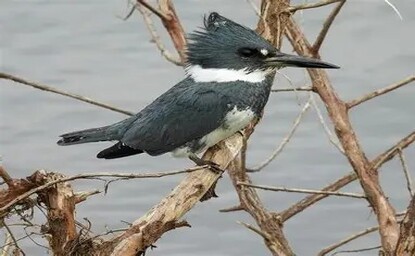
The Belted Kingfisher is one of Wisconsin's most distinctive waterside birds. With its large head, shaggy crest, sturdy bill, and blue-gray plumage, this energetic bird is often seen perched above rivers, lakes, ponds, and streams, watching for fish in the water below.
One of the easiest ways to notice a Belted Kingfisher is by its loud, rattling call, which often announces the bird's presence before it comes into view. Kingfishers frequently patrol shorelines, hover briefly above the water, and plunge headfirst to catch small fish.
Belted Kingfishers can be found throughout Wisconsin during the warmer months, and some remain during winter wherever suitable open water is available. Their unusual fishing techniques, bold appearance, and energetic behavior make them fascinating birds to observe.
How to Identify the Belted Kingfisher
The Belted Kingfisher is a stocky, medium-sized bird with a large head, shaggy crest, short legs, and a long, thick, pointed bill. Its distinctive shape and energetic behavior make it one of Wisconsin's most recognizable birds along rivers, lakes, and streams.
Adult Belted Kingfishers typically measure 11–14 inches long, with a wingspan of approximately 19–23 inches. Both males and females have blue-gray heads, backs, and wings, along with white underparts and a broad blue-gray band across the upper breast.
Male Belted Kingfishers have a single blue-gray breast band and a mostly white belly. Females are more colorful, displaying an additional rusty-orange band across the lower breast and reddish coloring along their sides. This is an unusual example of a bird species in which the female has more colorful plumage than the male.
The Belted Kingfisher's prominent, often tousled crest gives it a slightly oversized head, while its heavy bill is perfectly suited for catching fish. In flight, its broad wings and relatively short tail create a distinctive silhouette.
When identifying a Belted Kingfisher in Wisconsin, look for its blue-gray plumage, white neck collar, shaggy crest, and large pointed bill. You may also recognize it by its habit of perching on branches, wires, or other elevated spots overlooking water, where it watches for fish below.
Sounds and Behavior
The Belted Kingfisher is well known for its loud, rapid, rattling call, which often announces its presence before the bird can be seen. This distinctive sound resembles a series of sharp, mechanical-sounding notes and is frequently heard as a kingfisher flies along a river, lake, or stream.
Belted Kingfishers are active, energetic birds that spend much of their time searching for fish. They often perch on branches, posts, or wires overlooking water, carefully watching for movement beneath the surface. When they spot prey, they plunge headfirst into the water and capture fish with their long, pointed bills.
When a suitable perch is unavailable, a Belted Kingfisher may hover briefly above the water, beating its wings rapidly while keeping its head steady. Once it locates a fish, it dives toward the surface. After catching its prey, the bird usually returns to a perch, where it may reposition or strike the fish against a branch before swallowing it headfirst.
Belted Kingfishers are strongly territorial, particularly around feeding areas and nesting sites. They may chase other kingfishers away from their preferred stretches of shoreline, often giving loud rattling calls during these encounters.
Their fast, direct flight, frequent calling, and dramatic fishing dives make Belted Kingfishers especially entertaining birds to observe along Wisconsin waterways.
Habitat and Diet
Belted Kingfishers are most often found near rivers, streams, lakes, ponds, and other bodies of water throughout Wisconsin. They prefer areas with clear or relatively shallow water where they can spot fish swimming beneath the surface. Overhanging branches, fallen trees, and shoreline posts provide convenient perches from which to watch for prey.
These birds are particularly attracted to waterways bordered by natural vegetation and exposed earthen banks. Steep sandy or gravelly banks are important during the breeding season because Belted Kingfishers excavate nesting tunnels in them. Suitable habitat can be found along wooded rivers, quiet lakeshores, and wetland edges throughout Wisconsin.
Fish make up most of the Belted Kingfisher's diet. The birds commonly catch small fish that can be swallowed whole, using their strong, pointed bills to seize prey during rapid dives. They may also eat crayfish, aquatic insects, frogs, and other small aquatic animals when available.
Unlike diving ducks that pursue prey underwater, Belted Kingfishers usually hunt from above the surface. They watch for movement from an elevated perch or hover briefly over open water before plunging toward a fish. After capturing their prey, they often return to a branch or post to swallow it.
When exploring Wisconsin's waterways, look for Belted Kingfishers along open stretches of shoreline with nearby trees or exposed banks. Their preference for clear fishing areas and elevated perches makes them especially rewarding birds to observe from public trails and quiet river overlooks.
When and Where to Find Belted Kingfishers in Wisconsin
Belted Kingfishers can be found throughout Wisconsin along rivers, streams, lakes, ponds, and wetlands. They are especially attracted to waterways with good fishing opportunities, exposed shoreline perches, and nearby earthen banks suitable for nesting.
Spring and summer are excellent seasons to observe Belted Kingfishers. Many birds return to Wisconsin breeding territories during March and April as waterways begin to thaw. Throughout the warmer months, kingfishers may be seen patrolling their territories, calling loudly, and diving into the water to catch fish.
During fall, particularly from September through November, migrating Belted Kingfishers move through Wisconsin on their way to wintering areas farther south. Their distinctive rattling calls often make them easier to detect than to see.
Some Belted Kingfishers remain in Wisconsin during winter wherever open water provides access to fish. Ice-free stretches of rivers and streams can offer viewing opportunities, although the number of wintering birds varies with weather and ice conditions.
Good places to look include the Wisconsin River, the Mississippi River and its backwaters, Horicon Marsh, and wooded lakeshores throughout northern Wisconsin. Smaller rivers, streams, and local ponds can also provide excellent habitat, especially where branches or posts overlook the water.
For the best viewing opportunities, walk slowly along public shoreline trails or watch from a quiet river overlook. Listen for the kingfisher's loud, rattling call, then scan nearby branches, exposed snags, and shoreline posts for a bird watching the water below.
Nesting and Family Life
Belted Kingfishers usually begin their breeding season in Wisconsin during spring, often from April through June. They prefer nesting areas near rivers, lakes, and streams where exposed sandy or earthen banks provide suitable places for digging their nesting tunnels.
Unlike most birds, Belted Kingfishers do not build traditional nests from twigs and grasses. Instead, both the male and female use their strong bills and feet to excavate a tunnel into a steep bank. The tunnel may extend several feet into the earth and ends in a small chamber where the female lays her eggs.
A typical clutch contains 5–8 smooth, white eggs. Both parents help incubate the eggs for approximately 22–24 days. After hatching, the young remain inside the nesting chamber while their parents bring them small fish and other suitable prey.
Young Belted Kingfishers usually remain in the burrow for about 27–29 days before leaving the nest. During this time, both parents continue feeding and protecting them. Once the young emerge, they gradually develop their fishing skills and learn to hunt along nearby waterways.
During the nesting season, birders may notice adult kingfishers repeatedly flying toward a particular stretch of exposed riverbank. These visits can indicate an active nesting burrow. Observe from a respectful distance and avoid approaching or disturbing the bank, since nesting kingfishers can be sensitive to human activity.
Observing Belted Kingfishers in Wisconsin
Belted Kingfishers are fascinating birds to watch along Wisconsin's rivers, lakes, and streams. Their distinctive rattling calls, shaggy crests, and dramatic fishing dives make them especially rewarding subjects for birdwatchers of all experience levels.
One of the easiest ways to find a Belted Kingfisher is to listen for its loud, rapid rattling call. When you hear one, look along the shoreline for a bird perched on an overhanging branch, exposed snag, or post overlooking the water. Kingfishers often announce their presence while flying from one fishing perch to another.
Watch for a kingfisher sitting quietly above the water, scanning for fish. When it spots prey, it may dive directly from its perch or briefly hover before plunging headfirst into the water. After catching a fish, the bird often returns to a perch to prepare and swallow its meal.
Binoculars are especially helpful when observing Belted Kingfishers because these birds are often wary of approaching people. Try watching from a quiet shoreline trail, bridge with a safe viewing area, or public river overlook. Remaining still and allowing the bird to continue its natural activities can provide excellent viewing opportunities.
During spring and summer, keep an eye out for kingfishers flying toward steep sandy or earthen banks where they may have nesting burrows. Never approach, enter, or disturb an active nesting area, since repeated disturbance can interfere with the birds' breeding activities.
Whether you're exploring a northern Wisconsin lake, walking beside the Wisconsin River, or visiting a neighborhood pond, take time to listen and watch for the Belted Kingfisher. Its energetic behavior and specialized fishing techniques make every encounter memorable.