Blue Jay
Listen to the Blue Jay
Scientific Name: Cyanocitta cristata
Family: Corvidae - (Crows and Jays)
By Les Miller
introduction/overview
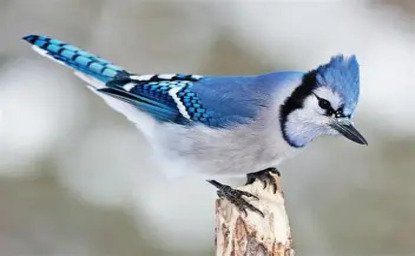
The Blue Jay is one of Wisconsin's most recognizable woodland birds. Its brilliant blue feathers, prominent crest, white face, and bold black markings make it easy to identify in forests, parks, and backyards.
Known for its intelligence and wide variety of calls, the Blue Jay is an active and curious bird. Its loud, familiar cries often announce its presence before it appears. Blue Jays can also imitate the calls of hawks and other birds.
Blue Jays live in Wisconsin year-round, although some migrate seasonally. They are especially common in deciduous and mixed woodlands, wooded neighborhoods, and areas with oak trees, where acorns are an important food source.
HOW TO IDENTIFY A BLUE JAY
The Blue Jay is a medium-sized songbird measuring approximately 9–12 inches long. Its brilliant blue upperparts, white face and chest, black necklace, and prominent crest make it one of Wisconsin's most recognizable birds.
Its wings and long tail display striking patterns of blue, black, and white. The crest can be raised or lowered depending on the bird's behavior, giving it a constantly changing appearance.
Male and female Blue Jays look nearly identical, although males are sometimes slightly larger. Young birds resemble adults but may have shorter crests and less developed plumage.
One of the easiest ways to recognize a Blue Jay is by its confident behavior and loud calls. Watch for it moving through trees, carrying acorns, or visiting backyard feeders.
Despite its vivid appearance, the Blue Jay's blue coloring comes from the microscopic structure of its feathers rather than blue pigment. Light scattering creates the brilliant blue we see.
SOUNDS AND BEHAVIOR
Blue Jays are among Wisconsin's most vocal woodland birds. Their best-known call is a loud, harsh jay-jay-jay, often heard when they communicate with other jays or react to a possible threat.
They also produce softer whistles, rattles, and musical notes. Blue Jays are talented mimics and sometimes imitate hawk calls, including those of Red-shouldered Hawks. Their variety of sounds can make them surprisingly difficult to identify by voice alone.
Intelligence and Social Behavior
Blue Jays belong to the crow family, a group known for intelligence and complex behavior. They may gather in small groups, communicate with one another, and loudly alert other birds to nearby predators.
Food Storage and Feeding
Blue Jays frequently collect acorns and other nuts, carrying them away to bury or hide for later use. Some forgotten acorns may eventually grow into new oak trees, making Blue Jays important contributors to forest regeneration.
At backyard feeders, Blue Jays may appear bold and assertive, often selecting peanuts or sunflower seeds before flying away to eat or store them.
Their distinctive voices, curiosity, and energetic behavior make Blue Jays entertaining birds to observe throughout the year.
HABITAT AND DIET
Where It Lives
Blue Jays are found throughout Wisconsin in deciduous and mixed forests, woodland edges, parks, and neighborhoods with mature trees. They are especially associated with oak woodlands, where acorns provide an important source of food.
These adaptable birds also visit backyards and gardens, particularly where trees offer shelter and feeding stations provide additional food.
What It Eats
Blue Jays are omnivores, eating a varied diet of acorns, nuts, seeds, fruits, insects, and other small animals. Acorns are especially important during fall and winter, when Blue Jays collect and store food for later use.
During warmer months, they also feed on caterpillars, beetles, grasshoppers, and other insects. They occasionally eat eggs or nestlings, although these make up a relatively small portion of their diet.
Backyard Feeding
Blue Jays readily visit feeders offering unsalted peanuts, sunflower seeds, and suet. Platform and tray feeders are particularly suitable for these larger songbirds.
Their habit of carrying and hiding nuts and seeds helps distribute tree seeds throughout Wisconsin's wooded landscapes.
WHEN AND WHERE TO FIND BLUE JAYS IN WISCONSIN
Blue Jays occur throughout Wisconsin and can be seen in every season. Although many remain in the state year-round, some migrate south in fall and return north during spring. These movements vary from year to year.
Spring and Summer
During spring, Blue Jays become increasingly vocal as they establish territories and begin nesting. Look for them in oak woodlands, mixed forests, wooded parks, and neighborhoods with mature trees.
In summer, family groups may be seen moving through trees and visiting feeding areas. Their loud calls often reveal their presence before they become visible.
Fall and Winter
Fall is an especially interesting time to observe Blue Jays collecting and storing acorns. Some Blue Jays migrate in loose flocks, while others remain in their established territories.
During winter, watch for resident Blue Jays visiting backyard feeders or searching for stored food in wooded areas. They may be especially noticeable around feeders offering peanuts and sunflower seeds.
Where to Look
Across Wisconsin, Blue Jays are common in deciduous and mixed forests, particularly where oak trees are present. They also frequent parks, wooded neighborhoods, and backyard feeding stations.
Listen for their distinctive calls and watch for flashes of blue as they move between branches. Their bold behavior and striking colors make them rewarding to observe year-round.
NESTING AND FAMILY LIFE
Building the Nest
Blue Jays typically build sturdy, cup-shaped nests in the branches of deciduous or coniferous trees. Both parents help construct the nest using twigs, roots, grasses, and other plant materials, creating a secure place to raise their young.
Nests are often concealed among leaves or dense branches, providing protection from predators and harsh weather.
Eggs and Young
A typical Blue Jay clutch contains four to five eggs, usually pale greenish or bluish with brown markings. The female generally incubates the eggs for about 17–18 days, while the male helps by bringing food.
After hatching, both parents feed and protect the nestlings. Young Blue Jays usually leave the nest approximately 17–21 days after hatching but continue depending on their parents for food and protection.
Raising a Family in Wisconsin
Blue Jays generally raise one brood each breeding season in Wisconsin. During spring and summer, listen for their calls and watch adults carrying nesting materials or food through wooded areas.
Young Blue Jays may remain with their parents for several weeks after leaving the nest, gradually learning to find food and navigate their surroundings.
Protecting mature trees, native vegetation, and healthy woodland habitats helps provide nesting and feeding opportunities for Blue Jays and other Wisconsin birds.