brown creeper
Listen to the Brown Creeper
Listen to the Brown Creeper
Scientific Name: Certhia americana
Family: Certhiidae (Treecreepers)
By Les Miller
introduction/overview
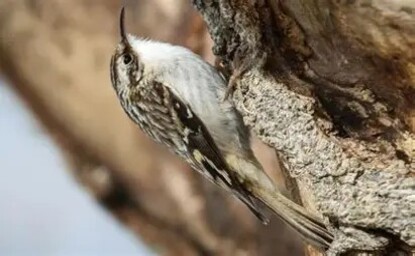
The Brown Creeper is one of Wisconsin's most fascinating and easily overlooked woodland birds. This tiny, well-camouflaged songbird has a streaked brown back, white underparts, and a slender, curved bill. Its coloring blends so naturally with tree bark that it can be difficult to spot even when it's only a few feet away.
Unlike woodpeckers and nuthatches, Brown Creepers have a distinctive way of searching for food. They typically begin near the base of a tree and work their way upward in a spiral, probing bark crevices for insects and spiders. After reaching higher branches, they often fly down to the base of another tree and repeat the process.
Brown Creepers can be found in Wisconsin's mature forests and wooded natural areas, particularly where large trees and rough bark provide abundant feeding opportunities. Their quiet movements and excellent camouflage make spotting one a rewarding experience for observant birdwatchers.
How to Identify a Brown Creeper
The Brown Creeper is a tiny woodland songbird measuring approximately 4¾ to 5½ inches long. Its upperparts are patterned with shades of brown, black, and buff, creating excellent camouflage against rough tree bark. Its underparts are mostly white, but they are often hidden as the bird climbs along a tree trunk.
One of its most distinctive features is a slender, downward-curved bill, which it uses to probe narrow bark cracks for insects and spiders. Brown Creepers also have a relatively long, stiff tail that helps support their bodies as they climb. Males and females look nearly identical, making them difficult to distinguish in the field.
The easiest way to recognize a Brown Creeper is by watching how it moves. Unlike White-breasted Nuthatches, which frequently climb headfirst down tree trunks, Brown Creepers almost always travel upward in a spiral. When they reach the upper portion of a tree, they often fly down to the base of another trunk and begin climbing again. Their small size, curved bill, bark-colored plumage, and distinctive climbing pattern are reliable identification clues for Wisconsin birdwatchers.
Sounds and Behavior
Brown Creepers have delicate, high-pitched voices that can be difficult to hear, especially in busy woodland environments. Their song is a thin, musical series of rising and falling notes, often described as sweet and slightly wavering. Their calls are typically short, faint see or tsee sounds that may be easier to notice when the surrounding woods are quiet.
Unlike woodpeckers, Brown Creepers do not drum on trees to communicate. Instead, males sing during the breeding season to establish territories and attract mates. Their high-pitched songs can be particularly noticeable during spring mornings in Wisconsin's mature forests.
Brown Creepers spend much of their time searching for tiny insects and spiders hidden in tree bark. Starting near the base of a trunk, they climb upward in short, deliberate movements, using their stiff tail feathers for support. After reaching higher branches, they often fly to another tree and climb again. Their quiet behavior and bark-colored plumage make them easy to overlook, even when they are close by.
Habitat and Diet
Brown Creepers prefer mature forests with large trees, rough bark, and standing dead wood. In Wisconsin, they occur in coniferous, deciduous, and mixed woodlands, especially where older trees provide plenty of places to search for food. They also visit wooded parks, nature preserves, and forested areas along rivers and streams.
Their diet consists primarily of small insects, insect eggs, larvae, and spiders. Using their slender, downward-curved bills, Brown Creepers probe tiny cracks and crevices in tree bark to uncover food that other birds may overlook. This specialized feeding behavior lets them search areas of tree trunks that are difficult for larger birds to reach.
During Wisconsin's colder months, Brown Creepers continue searching tree bark for insects and other small invertebrates. They may occasionally eat seeds or visit suet feeders, although they are much less common at feeders than woodpeckers or nuthatches. Mature trees and natural woodland habitat remain their most important food sources year-round.
When and Where to Find Brown Creepers in Wisconsin
Brown Creepers can be found in Wisconsin year-round, though their seasonal distribution varies. They breed primarily in mature forests in northern and central Wisconsin, where large trees and loose bark provide suitable nesting habitat. During migration and winter, they become more noticeable in southern Wisconsin, visiting wooded parks, nature preserves, and neighborhoods with mature trees.
Spring and fall are excellent times to search for Brown Creepers. Migrating birds pass through wooded areas across the state, often stopping in forests and along tree-lined waterways. During summer, look for breeding birds in northern Wisconsin's mature coniferous and mixed forests, where they quietly search tree trunks for insects and spiders.
Winter can be an especially rewarding season for spotting Brown Creepers in southern Wisconsin. With fewer leaves on the trees, their upward climbing movements become easier to notice. Look closely at large tree trunks in oak woodlands, wooded parks, and river corridors. Brown Creepers sometimes join mixed flocks of chickadees and nuthatches, so following these active groups can help you discover a creeper moving quietly among them.
Nesting and Family Life
Brown Creepers begin breeding in Wisconsin in spring, particularly in mature northern and central Wisconsin forests. Unlike woodpeckers, which excavate nesting cavities, Brown Creepers usually build their nests in narrow spaces behind loose or peeling bark on standing dead or dying trees. These sheltered locations help conceal their nests from predators and harsh weather.
The female constructs a small, cup-shaped nest using twigs, bark strips, moss, and other plant materials, lining it with soft feathers and fine fibers. She typically lays five to six small, whitish eggs marked with reddish-brown spots. The female incubates the eggs for approximately two weeks while the male helps provide food.
After hatching, both parents bring insects and spiders to their young. Nestlings usually leave the nest after about two weeks, although adults may continue feeding them as they become more independent. Brown Creepers depend on mature trees and naturally peeling bark to nest successfully, making the preservation of older woodland habitats especially important in Wisconsin.
Attracting Brown Creepers to Your Backyard
Brown Creepers occasionally visit Wisconsin backyards, especially those bordering mature woodlands or with large, established trees. Unlike chickadees, nuthatches, and woodpeckers, they rarely visit traditional seed feeders. Providing suitable natural habitat is the best way to encourage these quiet, well-camouflaged birds to visit.
Mature trees with rough bark offer important feeding opportunities because Brown Creepers search bark crevices for tiny insects, spiders, and their eggs. Preserving older trees and, where safe, standing dead wood helps maintain these natural food sources. Avoiding unnecessary pesticide use also supports the insects that Brown Creepers depend on throughout the year.
During Wisconsin's colder months, Brown Creepers may occasionally investigate suet placed against a tree trunk, although feeder visits are uncommon. Backyards with wooded surroundings, native vegetation, and a variety of mature trees offer the best opportunities for sightings. Watch carefully for a tiny brown bird moving upward along a trunk before flying down to begin climbing another tree.