Common Merganser
Listen to the Common Merganser
Scientific name: Mergus merganser
Family: Anatidae (Ducks, Geese, and Swans)
By Les Miller
introduction/overview
The Common Merganser is a large diving duck found on Wisconsin's lakes, rivers, and other open waters. Unlike many ducks that feed primarily on plants or aquatic invertebrates, Common Mergansers specialize in catching fish, using their long, narrow, serrated bills to grasp slippery prey.
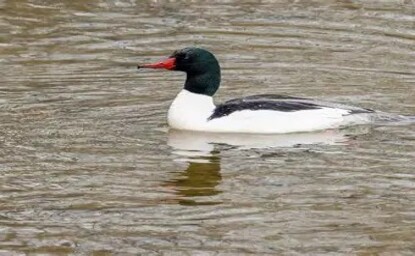
Male Common Mergansers are striking birds, with dark green heads, bright white bodies, and reddish-orange bills. Females have warm reddish-brown heads with shaggy crests, gray bodies, and a distinctive white chin patch. Both sexes are streamlined swimmers and powerful underwater hunters.
In Wisconsin, Common Mergansers can be observed during migration, throughout the breeding season in suitable northern habitats, and during winter wherever open water remains. Watching these ducks dive, surface, and travel along a river or lakeshore offers birders a fascinating look at one of Wisconsin's most accomplished fish-eating water birds.
How to Identify the Common Merganser
The Common Merganser is a large, streamlined diving duck with a long body, a slender neck, and a narrow, reddish-orange bill. Unlike the broad, flat bills of many other ducks, its bill has serrated edges that help it grip slippery fish.
Adult males are especially striking, with a glossy dark-green head, bright white body, black back, and reddish-orange bill and feet. In good sunlight, the white body may show a faint pinkish tint. Males generally have a smooth, rounded head without the prominent shaggy crest seen on females.
Females have a reddish-brown head with a noticeable shaggy crest, a white chin patch, and a gray body with a lighter breast. Their contrasting head and body colors make them recognizable even at a distance. Juveniles resemble females, although their markings can be less distinct.
Common Mergansers typically measure 21–28 inches long, with a wingspan of approximately 31–39 inches. They are noticeably larger than Hooded Mergansers and have a different head shape and bill profile.
When identifying a Common Merganser in Wisconsin, pay particular attention to its long, thin red bill, streamlined swimming posture, and distinctive head pattern. These features help separate it from similar species, including the Red-breasted Merganser, which generally has a shaggier appearance and a different body pattern.
Sounds and Behavior
Common Mergansers are generally quieter than many other ducks, but they produce a variety of calls during courtship, communication, and interactions with other birds. Females may give rough, rattling or croaking calls, while males sometimes produce soft, low-pitched sounds during courtship displays.
One of the most interesting behaviors of the Common Merganser is its ability to hunt fish underwater. These diving ducks swim beneath the surface using their powerful feet to propel themselves. Their narrow, serrated bills help them grasp slippery fish, which they usually swallow whole.
Common Mergansers often swim with their bodies low in the water, occasionally dipping their heads below the surface to search for prey. They may dive repeatedly while feeding and sometimes gather in groups to hunt in the same area.
During migration and winter, Common Mergansers may form flocks on large lakes and open rivers. They are strong, fast fliers, and their direct flight and streamlined bodies make them recognizable as they travel over Wisconsin waterways.
During the breeding season, pairs may be seen together on northern lakes and rivers. Females later care for their ducklings, which can swim and dive soon after hatching. Observing these behaviors gives birders a chance to appreciate this specialized fish-eating duck.
Habitat and Diet
Common Mergansers prefer clear freshwater lakes, rivers, and streams where they can search for fish beneath the surface. In Wisconsin, they are especially associated with wooded lakes and rivers in the northern part of the state, though they also appear on larger waterways throughout the state during migration and winter.
During the breeding season, Common Mergansers favor lakes and rivers bordered by mature forests. These wooded habitats provide access to the tree cavities and other sheltered nesting sites that females use to raise their young. In fall and winter, the ducks often gather on large lakes and along open stretches of river where fish remain accessible.
Fish make up most of the Common Merganser's diet. Its long, narrow bill has toothlike serrations that help the bird catch and hold slippery prey. Common Mergansers eat a variety of small fish, including minnows and other species commonly found in freshwater habitats.
They may also consume aquatic insects, crustaceans, and other small aquatic animals, particularly when young. Ducklings begin feeding on small aquatic invertebrates before gradually shifting toward a diet that includes more fish.
When searching for food, Common Mergansers frequently swim with their heads submerged to locate prey, then dive underwater to pursue it. Birders watching a quiet Wisconsin lake or river may see these ducks repeatedly disappear beneath the surface, then emerge with their catch.
When and Where to Find Common Mergansers in Wisconsin
Common Mergansers occur throughout Wisconsin, though their numbers and locations shift with the seasons. They are especially associated with clear lakes, rivers, and wooded waterways with plentiful fish.
Spring and fall migration provide excellent opportunities to observe Common Mergansers. During March and April, migrating birds appear on lakes and rivers as the ice begins to melt. In October and November, additional mergansers move through Wisconsin as they travel toward their wintering areas.
During the breeding season, Common Mergansers are most likely to be found in northern Wisconsin, where forested lakes and rivers provide suitable nesting habitat. Birders exploring waterways in Vilas, Oneida, Forest, and other northern counties may encounter these impressive diving ducks.
In winter, Common Mergansers often gather wherever water remains open. Lake Michigan, the Mississippi River, and ice-free sections of other large Wisconsin rivers can provide good viewing opportunities. Their presence varies with ice conditions and fish availability.
For the best chance of spotting Common Mergansers, visit lakeshores, river overlooks, and public wildlife viewing areas during the morning or late afternoon. Scan open water with binoculars and watch for their long, narrow bills, streamlined bodies, and repeated underwater dives.
Nesting and Family Life
Common Mergansers typically begin nesting in Wisconsin during spring, usually from April through June, depending on local weather and conditions. They breed primarily around forested lakes and rivers in northern Wisconsin, where mature trees provide suitable nesting sites.
Unlike many ducks that nest on the ground, female Common Mergansers often choose large natural tree cavities or abandoned woodpecker holes. They may also nest in hollow logs, rock crevices, or other sheltered locations near water. The female lines the nesting cavity with down feathers to help protect and insulate her eggs.
A typical clutch contains approximately 6–17 creamy white eggs. The female incubates them for about 28–35 days, while the male generally leaves the nesting area before the eggs hatch.
Soon after hatching, the ducklings make a remarkable journey from their nest to the water. Even when the nest is high in a tree, the young birds jump from the cavity to the ground, then follow their mother toward a nearby lake or river. Their soft down helps cushion the landing.
The female leads and protects her ducklings as they learn to feed and navigate the water. Young mergansers begin by eating aquatic insects and other small prey before gradually learning to catch fish. Occasionally, birders may observe large groups of ducklings accompanied by one female, a behavior associated with brood mixing and shared care.
Observing Common Mergansers in Wisconsin
Common Mergansers are fascinating birds to observe because of their specialized fishing abilities and distinctive appearance. Wisconsin's lakes, rivers, and other open waterways provide excellent opportunities to watch these large diving ducks throughout much of the year.
When searching for Common Mergansers, look for birds swimming with their bodies low in the water and their long, narrow bills pointing forward. Males are easily recognized by their dark-green heads and bright white bodies, while females have reddish-brown heads, shaggy crests, and gray bodies.
One of the most rewarding behaviors to watch is their underwater hunting. Common Mergansers may repeatedly submerge their heads to locate fish before diving beneath the surface. With patience, you may see one emerge carrying a small fish in its bill.
During migration and winter, scan open water from public shorelines, bridges with safe viewing areas, or designated wildlife overlooks. Binoculars help you observe nearby birds, while a spotting scope can make distant mergansers easier to identify.
During the breeding season, watch for females accompanied by ducklings on northern Wisconsin lakes and rivers. Maintain a respectful distance from nesting areas and young birds, and avoid approaching or disturbing wildlife. Quiet observation often provides the best opportunities to appreciate the Common Merganser's natural behavior.