downy woodpecker
Listen to the Downy Woodpecker
Scientific Name: Dryobates pubescens
Family: Picidae
By Les Miller
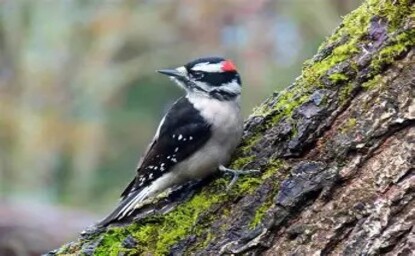
The Downy Woodpecker is a small, black-and-white bird with a white back, spotted wings, and a short, straight bill. Males have a small red patch on the back of the head, while females have no red marking.
One of the best identification clues is its bill. The Downy Woodpecker's bill is noticeably shorter than the longer, sturdier bill of the similar-looking Hairy Woodpecker.
How to Identify a Downy Woodpecker
The Downy Woodpecker is Wisconsin's smallest woodpecker, measuring about 5½ to 7 inches long. It has a black-and-white patterned body, a bright white stripe down its back, and white spots on its black wings.
Males have a small red patch on the back of the head, while females lack this marking. Both sexes have a short, straight bill that looks noticeably smaller than the bill of the similar-looking Hairy Woodpecker.
Downy Woodpeckers are active climbers, often moving up tree trunks and along smaller branches while searching for insects. Their small size, short bill, and bold black-and-white markings are excellent clues for identifying them in Wisconsin's woodlands and backyards.
Where to Look in Wisconsin
Downy Woodpeckers occur throughout Wisconsin in deciduous forests, wooded parks, orchards, and residential neighborhoods with mature trees. They are especially common along woodland edges, where they search tree trunks and smaller branches for insects.
Look for them climbing tree trunks, inspecting dead branches, or moving through shrubs and saplings. Unlike larger woodpeckers, their small size allows them to feed on thin branches and plant stems.
Downy Woodpeckers also regularly visit backyard feeders, especially those offering suet. Because they remain in Wisconsin year-round, they're enjoyable to watch even during the coldest winter months.
Songs and Calls
Listen for the Downy Woodpecker's sharp pik call and its distinctive descending whinny—a rapid series of notes that slows toward the end. Both sounds can help you locate this small woodpecker among Wisconsin's trees.
Downy Woodpeckers also drum on branches and tree trunks to communicate and defend territory. Their drumming consists of a short, rapid burst of taps rather than a long, continuous roll.
Downy Woodpeckers move quickly along tree trunks and branches, using their stiff tail feathers for support as they search for insects. They frequently inspect small branches, twigs, and even dried plant stems that larger woodpeckers cannot easily reach. During spring, their drumming and calling become more frequent as they establish territories and communicate with potential mates.
Habitat and Diet
Downy Woodpeckers thrive in Wisconsin's deciduous and mixed forests, wooded parks, orchards, and residential neighborhoods with mature trees. They are especially comfortable along forest edges, where trees, shrubs, and open areas provide a variety of feeding opportunities.
Their diet consists mainly of insects and their larvae, including beetles, ants, caterpillars, and other small invertebrates found beneath bark and inside decaying wood. Their small size allows them to forage on slender branches and plant stems that larger woodpeckers cannot easily use.
During fall and winter, Downy Woodpeckers also eat seeds, berries, and other plant materials. They readily visit backyard suet feeders and may take sunflower seeds or peanuts, making them familiar visitors throughout Wisconsin's colder months.
When You Can See Them in Wisconsin
Downy Woodpeckers are year-round residents throughout Wisconsin, so you can enjoy watching them in every season.
During spring, listen for increased drumming and calling as pairs establish territories and begin nesting. In summer, watch for adults feeding young birds around wooded areas and backyard trees.
Fall and winter are especially good times to spot Downy Woodpeckers at suet feeders. They also search tree bark, branches, and dried plant stems for insects throughout the colder months.
Nesting and Family Life
Downy Woodpeckers nest in cavities they excavate inside dead trees or decaying branches. In Wisconsin, nesting activity generally begins in spring, with both the male and female helping to create a nesting cavity.
The female typically lays four to five white eggs. Both parents take turns incubating the eggs for about 12 days and feeding the young after they hatch.
Young Downy Woodpeckers usually leave the nest about three weeks after hatching. The parents continue caring for them as they learn to climb trees and search for insects.
Attracting Downy Woodpeckers to Your Backyard
Downy Woodpeckers are welcome visitors to Wisconsin backyards, especially where mature trees and natural vegetation provide food and shelter.
Offering suet in a sturdy feeder is one of the easiest ways to attract them. They may also visit feeders offering black-oil sunflower seeds or shelled peanuts.
Leaving dead branches or standing dead trees in place, when safe to do so, provides valuable feeding and nesting habitat. Avoiding unnecessary pesticide use also helps protect the insects these small woodpeckers depend on.
With a little patience, you may enjoy watching Downy Woodpeckers throughout the year, from spring courtship and drumming to winter visits at your feeders.