Great Blue Heron
Listen to the Great Blue Heron
Scientific Name: Ardea herodias
Family: Ardeidae (Herons and Egrets)
By Les Miller
introduction/overview
The Great Blue Heron (Ardea herodias) is one of Wisconsin’s most recognizable wetland birds. Standing nearly four feet tall, this graceful wading bird is often seen motionless along lakeshores, rivers, marshes, and shallow ponds, patiently watching for fish. Its long neck, dagger-like bill, and broad wings make it impressive both on the ground and in flight. Whether you’re exploring a quiet wetland or watching from a park trail, spotting a Great Blue Heron is always a memorable birding experience.
How to Identify the Great Blue Heron
The Great Blue Heron is Wisconsin’s largest regularly occurring heron, standing about four feet tall with long legs, a long S-shaped neck, and a thick, pointed yellowish bill. Its blue-gray body, white face, black stripe extending above the eye, and shaggy feathers on the neck and chest make it distinctive.
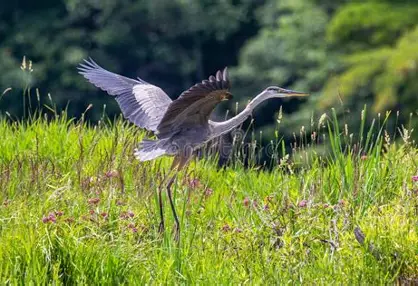
When hunting, it may stand almost perfectly still in shallow water before striking quickly at a fish. In flight, the Great Blue Heron folds its neck into an S-shape and trails its long legs behind its body. This tucked-neck silhouette helps distinguish it from cranes, which fly with their necks stretched straight forward.
Sounds and Behavior
The Great Blue Heron is generally quiet while feeding, but it can produce a loud, harsh, croaking call when startled or disturbed. Its deep, raspy squawk is often heard as the bird takes flight or approaches a nesting colony.
Great Blue Herons are patient hunters. They often stand motionless in shallow water, carefully watching for movement before striking with their long, pointed bills. At other times, they walk slowly through the water, searching for fish, frogs, and other aquatic prey.
Although they usually feed alone, Great Blue Herons commonly nest in colonies called heronries, sometimes building large stick nests high in trees. Watching one fly overhead with slow, powerful wingbeats and its neck folded back is one of Wisconsin’s memorable wetland sights.
Habitat and Diet
Great Blue Herons occur throughout Wisconsin wherever shallow water offers good feeding opportunities. They frequent marshes, lake shores, rivers, ponds, wetlands, and the edges of slow-moving streams. They also visit agricultural fields and wet meadows, especially where frogs and small mammals are abundant.
Fish make up much of the Great Blue Heron's diet, but these adaptable hunters also eat frogs, crayfish, aquatic insects, small mammals, reptiles, and occasionally small birds. Using their sharp bills, they quickly seize or spear prey before swallowing it whole.
In Wisconsin, look for Great Blue Herons along quiet shorelines, wetland edges, and shallow bays. They are most easily observed when the water is calm, and they can hunt without disturbance.
When and Where to Find Great Blue Herons in Wisconsin
Great Blue Herons are widespread across Wisconsin from spring through fall. Most return as lakes and wetlands begin to thaw in March and April, and many remain until October or November. Some individuals may stay through the winter wherever open water and sufficient food are available.
Good places to watch for Great Blue Herons include Horicon Marsh, the wetlands along the Wisconsin River, and shallow bays around Lake Winnebago. You can also find them at smaller ponds, nature preserves, and river corridors throughout the state.
Early morning and late afternoon are especially rewarding times to look for these birds. Scan shallow shorelines and marsh edges for a tall, motionless figure standing among cattails or slowly wading through the water. A pair of binoculars will help you observe their hunting behavior without disturbing them.
Nesting and Family Life
Great Blue Herons usually nest in colonies called heronries, where several pairs—sometimes dozens—build nests in tall trees near wetlands, rivers, or lakes. They often reuse and expand their large stick nests in later breeding seasons.
In Wisconsin, nesting activity generally begins in early spring. Females typically lay three to five pale blue eggs, and both parents take turns incubating them for about four weeks. After hatching, the young remain in the nest for about two months while both parents feed them.
Heronries can be fascinating to observe from a distance, especially when adults return to their nests carrying food. However, nesting colonies are sensitive to disturbance, so birders should remain on established trails and use binoculars or spotting scopes rather than approaching the nests.
Observing Great Blue Herons in Wisconsin
Watching a Great Blue Heron hunt is one of the most rewarding experiences for Wisconsin birders. These patient birds may remain perfectly still for several minutes before suddenly striking at a fish or other aquatic prey. Their slow movements make them excellent subjects for beginners learning to observe bird behavior.
When visiting wetlands, scan the edges of shallow water, fallen logs, and quiet bays. Great Blue Herons are often easier to spot from a distance because of their impressive height and distinctive silhouette. Binoculars or a spotting scope will help you appreciate their blue-gray plumage and graceful movements.
For the best experience, approach quietly and maintain a respectful distance. If a heron stops feeding, becomes alert, or begins moving away, give it more space. With a little patience, you may witness one of Wisconsin's most impressive wetland hunters in action.