mallard
Listen to the Mallard
Scientific name: Anas platyrhynchos
Family: Anatidae (Ducks, Geese, and Swans)
By Les Miller
introduction/overview
The Mallard is one of Wisconsin's most familiar and widely recognized ducks. Found on lakes, rivers, marshes, and neighborhood ponds, this adaptable waterbird is often the first duck that beginning birdwatchers learn to identify.
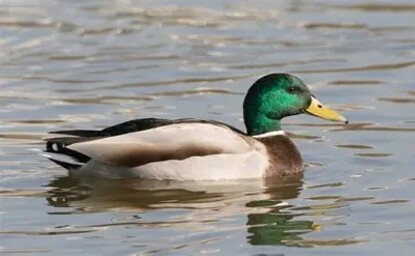
Male Mallards are especially recognizable during the breeding season, with their glossy green heads, bright yellow bills, chestnut-brown breasts, and gray bodies. Females have mottled brown plumage that provides excellent camouflage, along with orange-and-brown bills. Both sexes display a distinctive blue wing patch, called a speculum, bordered by white.
Mallards are dabbling ducks, meaning they usually feed near the water's surface rather than diving completely underwater. They are common throughout Wisconsin during spring, summer, and fall, and many remain through winter wherever open water and food are available.
Whether you're watching a Mallard tip forward to feed in a shallow pond or observing a mother leading her ducklings along a quiet shoreline, this familiar species offers excellent opportunities to learn about waterfowl behavior.
How to Identify the Mallard
The Mallard is a medium-to-large dabbling duck with a broad bill, rounded body, and distinctive wing markings. Adults typically measure 20–26 inches long, with a wingspan of approximately 32–37 inches. Males and females look quite different during much of the year, making this species especially interesting for beginning birdwatchers to identify.
Adult males, called drakes, are easily recognized by their glossy green heads, bright yellow bills, narrow white neck rings, and rich chestnut-brown breasts. Their bodies are mostly gray, with black rear ends and curled black feathers near the tail. The green head can sometimes appear dark blue or nearly black depending on the lighting.
Females have mottled brown plumage that provides excellent camouflage among shoreline grasses and wetland vegetation. Their bills are usually orange with varying amounts of dark coloring. Although less colorful than males, females share the same general body shape and characteristic blue wing patches.
Both sexes have an iridescent blue or violet-blue wing patch, called a speculum, bordered by white. This marking is especially noticeable when the bird stretches its wings or takes flight.
During late summer, male Mallards temporarily lose much of their bright breeding plumage and develop a mottled brown appearance known as eclipse plumage. At this time, they may resemble females, although their yellowish bills can help distinguish them.
When identifying Mallards in Wisconsin, look for their broad bills, familiar duck shape, blue wing patches, and the male's distinctive green head during the breeding season. Be aware that domestic and hybrid Mallards may show unusual colors or patterns.
Sounds and Behavior
Mallards are among the most vocal and familiar ducks in Wisconsin. Females produce the classic loud, repeated quacking calls many people associate with ducks. Males generally have softer, raspier calls that sound more like low whistles or quiet nasal notes.
Mallards are dabbling ducks, meaning they feed primarily at or just below the water's surface rather than diving deeply underwater. They often tip forward with their tails pointing upward as they reach beneath the surface for aquatic plants, seeds, and small animals.
During courtship, male Mallards perform a variety of displays to attract females. These may include head movements, exaggerated swimming postures, and brief vocalizations. Courtship often begins during fall and winter, and pairs may form well before the spring nesting season.
Mallards are social birds that frequently gather in groups on lakes, ponds, rivers, and wetlands. During migration and winter, they may form large flocks, sometimes mixing with other duck species.
Although Mallards are comfortable around people in many urban parks, they remain alert to potential danger. When disturbed, they may quickly take flight directly from the water, using powerful wingbeats to escape. Watching their feeding, courtship, and flocking behavior provides an excellent introduction to Wisconsin's waterfowl.
Habitat and Diet
Mallards are highly adaptable ducks found in a wide variety of freshwater habitats throughout Wisconsin. They commonly inhabit shallow lakes, ponds, marshes, wetlands, rivers, and slow-moving streams. They also frequently visit city parks, neighborhood ponds, and other areas where water and food are readily available.
Mallards prefer shallow water with abundant aquatic vegetation, where they can easily reach food while dabbling. Wetlands with cattails, reeds, grasses, and sheltered shorelines provide feeding areas, resting places, and nesting cover. During migration, Mallards also gather in flooded fields and agricultural areas.
Mallards are omnivores, eating both plants and animals. Their diet includes aquatic plants, seeds, grasses, grains, insects, snails, and other small aquatic invertebrates. The types of food they consume change with the seasons and availability of natural resources.
During spring and summer, female Mallards and growing ducklings depend heavily on protein-rich insects and aquatic invertebrates. In fall and winter, Mallards often consume more seeds and grains, including leftover corn in harvested agricultural fields.
When feeding in shallow water, Mallards frequently tip forward with their tails raised above the surface, a behavior known as dabbling. They may also feed by swimming along the surface or grazing on land. Watching these familiar feeding behaviors is an excellent way to learn more about Wisconsin's dabbling ducks.
When and Where to Find Mallards in Wisconsin
Mallards are among the most widespread ducks in Wisconsin and can be observed throughout the state. They occur in lakes, rivers, marshes, shallow wetlands, and neighborhood ponds, making them easy to spot in both rural and urban areas.
Spring is an excellent time to watch Mallards as migrating birds return to Wisconsin and breeding pairs begin establishing nesting territories. From March through May, Mallards become increasingly common as ponds and wetlands thaw. Many remain throughout the summer to nest and raise their ducklings.
Fall migration, especially from September through November, brings additional Mallards into Wisconsin. Large flocks may gather at wetlands, wildlife refuges, and agricultural areas where food and sheltered resting places are available.
During winter, some Mallards remain in Wisconsin wherever water stays open. Ice-free stretches of rivers, springs, and urban ponds can attract wintering ducks, particularly in southern Wisconsin. Severe cold and widespread ice may push many birds farther south.
Excellent places to look for Mallards include Horicon Marsh, the Upper Mississippi River wetlands, Lake Winnebago, and local parks with ponds or sheltered waterways. Because Mallards are so adaptable, even a small neighborhood pond can offer rewarding opportunities to observe them.
For the best viewing experience, visit wetlands and lakeshores during the early morning or late afternoon. Watch for Mallards feeding in shallow water, resting along shorelines, or flying between nearby ponds and marshes.
Nesting and Family Life
Mallards typically begin nesting in Wisconsin during spring, often from April through June, depending on weather conditions. Females usually choose concealed ground nests near ponds, marshes, lakes, or other wetlands. Some Mallards also nest in gardens, grassy areas, and other unexpected locations away from water.
The female builds a shallow nest using grasses, leaves, and other plant material, then lines it with soft down feathers from her breast. A typical clutch contains 8–13 pale greenish or creamy-colored eggs. The female incubates the eggs for approximately 26–30 days, while the male generally leaves before the ducklings hatch.
Mallard ducklings are precocial, meaning they hatch with their eyes open and can walk, swim, and feed themselves shortly after emerging from their eggs. Within about a day of hatching, the female usually leads her ducklings away from the nest and toward nearby water.
The mother Mallard protects and guides her young as they search for aquatic insects, small invertebrates, and other natural foods. Although ducklings can feed themselves, they depend on their mother for warmth, protection, and guidance during their early weeks.
Young Mallards gradually develop their flight feathers and usually become capable of flying at approximately 7–8 weeks of age. Watching a female Mallard lead her ducklings through a quiet Wisconsin pond or marsh is one of the most enjoyable birdwatching experiences of spring and early summer.
Observing Mallards in Wisconsin
Mallards are excellent birds for beginning birdwatchers because they are easy to find, recognize, and observe throughout Wisconsin. Their familiar appearance and interesting behaviors make them enjoyable subjects in city parks, quiet wetlands, and lakeside habitats.
When watching Mallards, look for their characteristic dabbling behavior. They often tip forward in shallow water, tails pointing upward, while searching for aquatic plants, seeds, and small animals. You may also see them grazing along shorelines or resting in groups near the water's edge.
Pay attention to the differences between males and females. Male Mallards display glossy green heads and chestnut-colored breasts during much of the year, while females have mottled brown plumage that helps them blend into wetland vegetation. During late summer, males develop less colorful eclipse plumage, making identification more challenging.
Spring and early summer offer wonderful opportunities to watch female Mallards leading their ducklings through ponds and marshes. Observe these families from a respectful distance, and never approach nests, separate ducklings from their mothers, or attempt to handle young birds.
Binoculars help you study Mallards without disturbing them. Avoid feeding ducks bread or other human foods, which can contribute to poor nutrition, water pollution, and unnatural concentrations of birds. Instead, enjoy watching them search for their natural foods.
Whether you're exploring Horicon Marsh, visiting a local nature preserve, or walking beside a neighborhood pond, take time to observe the Mallard's feeding habits, vocalizations, and interactions. Even this common Wisconsin duck can provide new discoveries with every visit.