Northern Cardinal
Listen to the Northern Cardinal
Northern Cardinal
Cardinalis cardinalis.
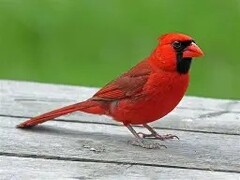
The Northern Cardinal (Cardinalis cardinalis) is one of Wisconsin's most recognizable and beloved backyard birds. The male's brilliant red plumage, prominent crest, and black facial mask make him unmistakable, while the female displays warm brown and reddish tones with a bright orange-red bill.
Northern Cardinals are year-round residents in much of Wisconsin, especially in southern and central areas. They favor woodland edges, shrubby thickets, parks, gardens, and residential neighborhoods where dense vegetation provides shelter and nesting opportunities.
Known for their rich, whistled songs and distinctive calls, Northern Cardinals bring color and music to Wisconsin landscapes throughout the year. Both males and females sing, making this species particularly interesting for birders learning to identify birds by sound.
How to Recognize a Northern Cardinal
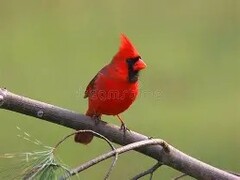
The Northern Cardinal is a medium-sized songbird with a distinctive pointed crest, a thick orange-red bill, and a long, rounded tail. Its strong bill is designed for cracking seeds, while its upright posture and prominent crest make it easy to recognize.
Male Northern Cardinals are brilliant red with a contrasting black mask around the face and throat. Females are mostly warm brown or tan, with reddish highlights on their wings, tails, and crests. Both sexes have the same characteristic shape and powerful bill.
Juvenile Northern Cardinals resemble females but initially have darker bills that gradually become orange-red as they mature.
Cardinals frequently perch in shrubs, small trees, and woodland edges. Their rich whistled songs and sharp chip calls often reveal their presence before they are seen.
Northern Cardinal Size and Appearance
Size and Measurements
Northern Cardinals are medium-sized songbirds with sturdy bodies, long tails, and thick, cone-shaped bills.
- Length: 8.3–9.1 inches
- Wingspan: 9.8–12.2 inches
- Weight: 1.5–1.7 ounces
- Body Shape: Stocky, with a rounded body and long tail
- Bill: Short, thick, and orange-red in adults
- Crest: Prominent, pointed, and adjustable depending on the bird's behavior
Male Appearance
Adult males are brilliant red with a black facial mask extending from the bill to the throat. Their wings and tails may appear slightly darker red.
Female Appearance
Adult females are primarily warm brown or tan, with reddish highlights on their wings, tails, and crests. Like males, they have a prominent crest and an orange-red bill.
Juvenile Appearance
Young Northern Cardinals resemble females, but their bills are initially grayish-black rather than orange-red. Their coloration becomes more developed as they mature.
Where to Look for Northern Cardinals
Northern Cardinals are year-round residents throughout much of Wisconsin, particularly in southern and central parts of the state. They favor areas with dense shrubs, tangled vegetation, and small trees that provide food, shelter, and nesting sites.
Good places to look for Northern Cardinals include:
- Backyards and gardens: Especially those with shrubs, hedges, bird feeders, and native plants.
- Woodland edges: Cardinals often stay near brushy borders rather than deep inside forests.
- Parks and nature preserves: Look along trails bordered by dense shrubs and thickets.
- Wetland edges: Shrubby vegetation near marshes, streams, and riverbanks can provide excellent habitat.
- Residential neighborhoods: Mature landscaping, evergreen shrubs, and backyard feeders frequently attract cardinals.
Wisconsin Birding Tip: Cardinals are often easiest to spot during winter, when their red plumage contrasts with snow and leafless branches. Listen for their sharp chip calls coming from dense shrubs.
Northern Cardinal Songs and Calls
Northern Cardinals are among Wisconsin's most recognizable singing birds. Their songs consist of loud, clear whistles that carry through gardens, parks, woodland edges, and neighborhoods.
Unlike many songbirds, both male and female Northern Cardinals sing.
Common Songs
Cardinal songs are often remembered as:
- Cheer, cheer, cheer!
- Birdie, birdie, birdie!
- What-cheer, what-cheer!
Common Calls
The most familiar call is a sharp, metallic chip or tik, used for communication and alarm.
Wisconsin Birding Tip
Listen for cardinal songs during late winter and spring, especially around wooded neighborhoods and shrubby park edges.
Behavior to Notice
Northern Cardinals are active, alert birds that often move between dense shrubs, low branches, and open feeding areas. Although their bright colors make them noticeable, they frequently stay hidden in thick vegetation.
Watch for a cardinal that:
- Hops along the ground while searching for seeds.
- Moves through shrubs and tangled branches.
- Raises or lowers its pointed crest.
- Uses its thick bill to crack open seeds.
- Perches in an exposed location to sing.
- Chases other cardinals away from its territory.
Territorial Behavior
Male Northern Cardinals defend breeding territories by singing and chasing away rivals. Sometimes a cardinal will attack its own reflection in a window or car mirror, mistaking it for another bird.
Feeding Behavior
Cardinals commonly forage on or near the ground, often beneath shrubs or backyard feeders. They use their powerful bills to open seeds and also eat fruits and insects.
Social Behavior
Cardinals are often seen in pairs during the breeding season. During fall and winter, they may gather in loose groups around reliable food sources.
Wisconsin Birding Tip
Watch the edges of dense shrubs, especially early in the morning. A cardinal may emerge briefly to feed before returning to cover.
What Northern Cardinals Eat
Northern Cardinals eat a varied diet of seeds, fruits, berries, and insects. Their thick, powerful bills are especially well suited for cracking seeds, but they also feed on many natural foods found in Wisconsin's woodlands, gardens, and shrublands.
Seeds and Plant Foods
Cardinals commonly eat:
- Sunflower seeds, especially black-oil sunflower seeds
- Safflower seeds
- Seeds from grasses and weeds
- Wild berries and small fruits
- Dogwood, elderberry, and other native shrub fruits
Insects and Other Animal Foods
During spring and summer, cardinals eat insects and other small invertebrates, including beetles, caterpillars, grasshoppers, and spiders. These protein-rich foods are especially important when parents are feeding growing nestlings.
Backyard Feeding
Northern Cardinals frequently visit backyard feeding stations. They particularly favor platform feeders, hopper feeders, and trays that provide enough room for their relatively large bodies and long tails.
Black-oil sunflower seeds and safflower seeds are popular choices for attracting cardinals.
Wisconsin Birding Tip
During winter, watch beneath backyard feeders and along the edges of evergreen shrubs. Cardinals often feed on fallen seeds while remaining close to protective cover.
When You Can See them
Northern Cardinals are year-round residents in much of Wisconsin. Unlike many songbirds, they do not undertake long-distance seasonal migrations. Their bright colors and familiar songs can be enjoyed in every season, particularly across southern and central Wisconsin.
Spring
Cardinals become especially vocal in late winter and spring as breeding territories are established. Males frequently sing from prominent perches, while pairs begin courtship and nesting activities.
Summer
Northern Cardinals remain active throughout the summer, raising young and searching for insects, seeds, and fruits. They may be less visible when nesting in dense shrubs and leafy vegetation.
Fall
As the breeding season ends, cardinals continue feeding in gardens, woodland edges, and brushy habitats. Young birds become more independent, and cardinals may gather loosely around reliable food sources.
Winter
Northern Cardinals remain in Wisconsin throughout winter, especially where shelter and food are available. Their vivid red plumage is particularly striking against snow-covered branches and evergreen shrubs.
Regional Differences
Cardinals are generally most widespread and frequently encountered in southern and central Wisconsin. They also occur farther north, particularly around towns, sheltered neighborhoods, and suitable shrubby habitats, although their distribution is less uniform in northern areas.
Wisconsin Birding Tip
Winter is an excellent time to look for Northern Cardinals. Watch backyard feeders, evergreen hedges, and brushy edges during early morning and late afternoon.
Nesting and Family Life
Northern Cardinals breed in Wisconsin during spring and summer, nesting in dense shrubs, small trees, hedges, and tangled vines. These sheltered locations help conceal their nests from predators and provide protection for developing young.
Nest Building
The female builds a cup-shaped nest using twigs, bark strips, leaves, grasses, and other plant materials. She typically places it within dense vegetation, often a few feet above the ground. The male may accompany her and bring food during the nesting period.
Eggs and Incubation
- Clutch size: Usually 2–5 eggs
- Egg appearance: Whitish or pale greenish, marked with brownish spots
- Incubation: Approximately 11–13 days
- Primary incubator: Female
Caring for the Young
Both parents feed the nestlings, bringing insects and other nutritious foods. Young cardinals generally leave the nest about 7–13 days after hatching but continue depending on their parents for food and protection afterward.
Multiple Broods
Northern Cardinals may raise two or more broods during a breeding season. The male sometimes continues caring for fledglings while the female begins another nesting attempt.
Wisconsin Birding Tip
Watch for cardinals carrying nesting materials or insects into dense shrubs during spring and summer. These behaviors may indicate a nearby nest.
Avoid approaching active nests or disturbing the surrounding vegetation.
Tips for Beginners
The Northern Cardinal is an excellent bird for practicing identification skills. Its distinctive shape, bright colors, familiar songs, and year-round presence make it especially rewarding to observe in Wisconsin.
Start with the Crest
Look for the pointed crest on top of the head. Both male and female Northern Cardinals have this feature, making it one of the most useful identification clues.
Look Beyond the Red Color
Male cardinals are brilliant red, but females are mostly warm brown with reddish wings, tails, and crests. Both have thick, cone-shaped bills that are orange-red in adults.
Learn the Song
Listen for loud, clear whistles that sound like cheer-cheer-cheer or birdie-birdie-birdie. Both males and females sing.
Watch the Shrubs
Cardinals often stay close to dense vegetation. When you hear a sharp chip call, look carefully along hedges, woodland edges, and tangled branches.
Visit a Backyard Feeder
Platform and hopper feeders offering sunflower or safflower seeds can provide excellent opportunities to watch cardinals at close range.
Observe Their Behavior
Notice how cardinals hop along the ground, raise and lower their crests, crack seeds with their thick bills, and retreat into nearby shrubs.
Wisconsin Birding Tip
Try watching a familiar feeder or neighborhood shrub at different times of the year. You may notice changes in cardinal singing, courtship, feeding, and family behavior.
A Good Bird for Learning
The Northern Cardinal is an excellent bird for developing identification and observation skills. Its distinctive crest, powerful bill, bright colors, and clear songs provide several clues that birders can learn to recognize.
Learning Through Observation
Watching Northern Cardinals throughout the year helps birders become familiar with differences between males, females, and young birds. Their behavior also changes with the seasons, offering opportunities to observe courtship, territorial singing, nesting, and feeding.
Practicing Bird Identification
Rather than relying on color alone, notice the cardinal's overall shape, pointed crest, thick bill, long tail, and characteristic movements. These features are especially helpful when identifying female and juvenile birds.
Learning Bird Sounds
Northern Cardinals are useful for practicing identification by ear. Their clear, whistled songs and sharp chip calls are often heard in neighborhoods, gardens, and woodland edges.
Building Birding Confidence
Because Northern Cardinals remain in much of Wisconsin throughout the year, birders can observe the same species repeatedly. Each encounter provides another opportunity to recognize familiar characteristics and discover new behaviors.
Birding Detective Tip
Spend a few minutes watching a cardinal before consulting a field guide or bird identification app. Notice its size, shape, colors, sounds, behavior, and surroundings. These observations help develop the skills needed to identify less familiar birds.
Look for the Northern Cardinal
The Northern Cardinal is one of Wisconsin's most rewarding birds to observe. Whether a brilliant red male is perched against a snowy winter landscape or a softly colored female is moving quietly through summer shrubs, every encounter offers an opportunity to appreciate this familiar songbird.
You don't need to travel far to find Northern Cardinals. Neighborhood parks, backyard gardens, woodland edges, nature preserves, and brushy trails can all provide excellent viewing opportunities.
Listen for their clear, whistled songs, watch for movement among dense branches, and notice the distinctive crest and strong bill that make cardinals so recognizable.
As you explore Wisconsin's parks, trails, and wildlife areas, keep an eye out for the Northern Cardinal. It's a wonderful reminder that memorable birding experiences can happen close to home.
Explore. Notice. Connect.