Red-winged Blackbird
Listen to the Red-winged Blackbird
Scientific Name: Agelaius phoeniceus
Family: Icteridae (Blackbirds and Orioles)
By Les Miller
introduction/overview
The Red-winged Blackbird is one of Wisconsin's most recognizable wetland birds. Its distinctive calls and brilliant red-and-yellow shoulder patches are familiar sights and sounds around marshes, ponds, wet meadows, and roadside ditches.
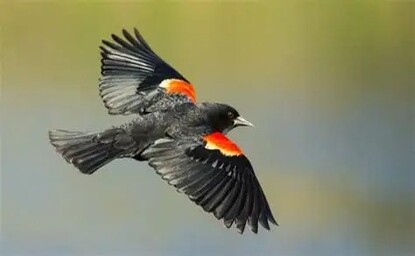
Male Red-winged Blackbirds are glossy black with bright red shoulder patches edged in yellow. Females look entirely different, with brown, heavily streaked plumage that provides excellent camouflage among cattails and grasses.
During spring, males return to Wisconsin's wetlands and begin defending their territories, often singing from exposed cattail stalks, fence posts, and shrubs. Their loud, bubbling songs are among the earliest signs of spring in many Wisconsin marshes.
Red-winged Blackbirds are widespread throughout Wisconsin during the breeding season. They can be found in wetlands, agricultural areas, grasslands, and other open habitats where suitable nesting and feeding areas are available.
Whether you're visiting a wildlife refuge, exploring a nature trail, or simply passing a roadside marsh, the Red-winged Blackbird offers an excellent opportunity to practice bird identification and recognize one of Wisconsin's most characteristic bird songs.
SONGS AND CALLS
The male Red-winged Blackbird's distinctive song is a rich, bubbling conk-la-ree! often heard throughout Wisconsin's marshes and wetlands.
Males sing from exposed perches to announce their territories and attract mates. Both males and females also produce sharp contact and alarm calls, including a short, dry check.
Learning these vocalizations can help birdwatchers recognize Red-winged Blackbirds even when the birds are hidden among cattails and marsh vegetation.
HOW TO IDENTIFY
Male Identification
The adult male Red-winged Blackbird is unmistakable when displaying his bright red shoulder patches, called epaulets. These brilliant red patches are bordered with yellow and contrast sharply with his otherwise glossy black plumage.
Males often perch prominently on cattails, fence posts, or shrubs, spreading their wings slightly and puffing out their feathers while singing. During territorial displays, the red shoulder patches stand out even more.
When resting, a male may partially conceal his colorful shoulder patches beneath his black wing feathers.
Female Identification
Female Red-winged Blackbirds look dramatically different from males. Instead of glossy black feathers, females have dark brown plumage with heavy streaking across the breast and body.
Their appearance can resemble a large sparrow, especially when they move quietly through marsh vegetation. However, females have a longer, more pointed bill and a different overall shape.
The streaked brown plumage provides excellent camouflage when females are nesting among cattails, grasses, and other wetland plants.
Size and Shape
Red-winged Blackbirds are medium-sized songbirds with sturdy bodies, relatively long tails, and sharply pointed bills.
Males are generally larger than females. Both sexes have strong, pointed bills suited for feeding on insects, seeds, and grains.
Identification Tips
Look for males displaying their colorful shoulder patches from exposed perches near wetlands. Their distinctive bubbling songs often reveal their presence before you see them.
When identifying females, watch for the pointed bill, dark streaking, and habitat. A heavily streaked brown bird moving among cattails may be a female Red-winged Blackbird rather than a sparrow.
Observing both sexes helps birdwatchers recognize this familiar Wisconsin species throughout the breeding season.
SOUNDS AND BEHAVIOR
Territorial Behavior
Male Red-winged Blackbirds are highly territorial during the breeding season. In early spring, males establish territories in marshes, wetlands, and grassy areas, often defending them vigorously against other males.
A territorial male frequently perches on a cattail, shrub, or fence post while singing and displaying his bright red shoulder patches. These displays help advertise his territory and attract females.
Red-winged Blackbirds sometimes chase much larger birds, including hawks, crows, and herons, when they approach nesting areas.
Songs and Communication
The male's familiar conk-la-ree! song is one of the characteristic sounds of Wisconsin wetlands.
During territorial displays, males often spread their wings, raise their shoulder feathers, and sing from prominent perches.
Both males and females produce sharp calls that help them communicate and warn of potential danger.
Social Behavior and Flocking
Although males defend individual territories during the nesting season, Red-winged Blackbirds become highly social outside the breeding season.
In late summer and fall, they gather in large flocks, sometimes mixing with Common Grackles, European Starlings, and other blackbirds.
These flocks may feed in agricultural fields, grasslands, and wetlands before gathering at communal roosting sites.
Feeding Behavior
Red-winged Blackbirds search for food on the ground, among grasses, and within wetland vegetation.
During spring and summer, they consume many insects and other small invertebrates. Seeds and grains become increasingly important during fall and winter.
Their pointed bills help them investigate plant material and capture insects hidden among stems and leaves.
Behavior to Watch for in Wisconsin
One of the most interesting sights in a Wisconsin marsh is a male Red-winged Blackbird calling from the top of a cattail while displaying his brilliant red shoulder patches.
Watch for males chasing intruders, females moving quietly through dense vegetation, and large flocks gathering over fields during late summer and fall.
These behaviors make Red-winged Blackbirds especially enjoyable to observe throughout the changing seasons.
HABITAT AND DIET
Preferred Habitats
Red-winged Blackbirds are strongly associated with wetlands, especially freshwater marshes filled with cattails, sedges, and other tall vegetation.
Throughout Wisconsin, they occur around ponds, marshes, wet meadows, lakeshores, and roadside drainage ditches. These habitats provide nesting sites, feeding opportunities, and protection from predators.
Red-winged Blackbirds also occupy grasslands, hayfields, and agricultural areas, particularly where tall vegetation offers suitable nesting cover.
Wetlands and Marsh Vegetation
Cattail marshes are among the most familiar habitats for Red-winged Blackbirds in Wisconsin.
Males frequently perch on tall cattail stalks to sing and defend their territories, while females build well-concealed nests among dense vegetation.
Wetlands also support abundant insects and other small invertebrates that provide important food during the breeding season.
Diet and Food Sources
Red-winged Blackbirds are omnivores and eat both animal and plant material.
During spring and summer, their diet includes insects such as beetles, caterpillars, grasshoppers, and dragonflies, along with spiders and other small invertebrates.
During fall and winter, seeds and grains become increasingly important. Red-winged Blackbirds may feed on wild grass seeds, weed seeds, corn, and other agricultural grains.
Seasonal Feeding Habits
During the breeding season, adults search for insects in marsh vegetation and nearby grassy areas. Protein-rich insects are especially important when feeding growing nestlings.
After nesting ends, Red-winged Blackbirds often gather in flocks and travel between wetlands, grasslands, and agricultural fields to find food.
You may see large groups feeding on the ground or gathering in fields before returning to communal roosting areas.
Where to Look in Wisconsin
Some of the best places to observe Red-winged Blackbirds include cattail marshes, wetland boardwalks, wildlife refuges, and nature preserves.
In spring and summer, listen for their distinctive songs from exposed perches near the water.
In late summer and fall, watch for flocks moving across open fields and gathering in wetlands.
Because Red-winged Blackbirds use a wide variety of wetland and open-country habitats, they are among Wisconsin's most frequently encountered marsh birds.
WHEN AND WHERE TO FIND IN WISCONSIN
Spring — March through May
Red-winged Blackbirds are among the earliest migratory songbirds to return to Wisconsin each spring.
Males often begin arriving in late February or March, depending on weather conditions. You can hear their familiar bubbling songs from cattail marshes and wet meadows as they establish breeding territories.
Females generally arrive after the males, and nesting activity increases as spring progresses.
March through May is an excellent time to watch males display their bright red shoulder patches and defend their territories.
Summer — June through August
Red-winged Blackbirds are widespread throughout Wisconsin during the breeding season.
Look for them in cattail marshes, wet meadows, grasslands, agricultural areas, and along the edges of ponds and lakes.
Males continue defending nesting territories during early summer, while females spend much of their time concealed among vegetation.
By late summer, family groups and larger flocks begin gathering as the nesting season winds down.
Fall — September through November
During fall, Red-winged Blackbirds increasingly gather in large flocks as birds prepare for migration.
You may see these groups feeding in agricultural fields, grasslands, and wetlands, sometimes alongside Common Grackles and other blackbird species.
Many Red-winged Blackbirds leave Wisconsin during autumn, although migration timing varies with weather and food availability.
Winter — December through February
Most Red-winged Blackbirds migrate south for the winter, but some remain in Wisconsin, particularly in southern areas with available food and suitable habitat.
Winter sightings are less common than during spring and summer. Birds that remain may join mixed blackbird flocks or forage in agricultural areas.
The first returning males may appear during late winter when conditions are favorable.
Where to Look Throughout Wisconsin
Red-winged Blackbirds can be found in suitable habitats across all regions of Wisconsin.
Some particularly productive places to search include:
- Horicon Marsh in Dodge and Fond du Lac counties.
- Crex Meadows Wildlife Area in Burnett County.
- Cherokee Marsh Conservation Park in Dane County.
- Pheasant Branch Conservancy in Dane County.
- Retzer Nature Center in Waukesha County.
These locations contain wetlands, open grasslands, or other habitats that may support Red-winged Blackbirds during the appropriate seasons.
Best Birdwatching Tips
Visit wetlands in the early morning, when males often sing from exposed perches.
Listen for the distinctive conk-la-ree! song and watch for flashes of red as males display their shoulder patches.
During spring and summer, scan cattail stands and grassy openings. In fall, look for large feeding flocks in agricultural fields and around wetland edges.
With their bold colors, recognizable songs, and widespread presence, Red-winged Blackbirds are rewarding birds to observe throughout Wisconsin's warmer months.
NESTING AND FAMILY LIFE
Courtship and Breeding Behavior
Red-winged Blackbirds begin establishing breeding territories shortly after returning to Wisconsin in spring.
Males advertise their territories by singing from prominent perches and displaying their bright red shoulder patches. These displays help attract females and warn competing males to stay away.
Red-winged Blackbirds have an unusual breeding system in which one male may maintain a territory containing several females' nests. Each female generally builds her own nest and takes primary responsibility for caring for her young.
Nest Construction
Female Red-winged Blackbirds build sturdy, cup-shaped nests among cattails, sedges, grasses, and shrubs.
Nests are often attached to several upright plant stems, helping keep them supported above shallow water or damp ground.
The female weaves grasses, leaves, and other plant fibers together, sometimes using wet vegetation that becomes firmer as it dries. She lines the interior with finer grasses to create a comfortable place for her eggs.
The nest is usually well concealed among dense vegetation, making it difficult for predators to locate.
Eggs and Incubation
A typical clutch contains three to four eggs, although clutch size can vary.
The eggs are generally pale blue-green with darker markings, often concentrated toward the larger end.
The female incubates the eggs for approximately 11 to 13 days. During this period, she remains attentive to the nest while the male continues defending his territory.
Raising the Young
After hatching, nestlings depend on their parents for food and protection.
The female provides most feeding and care, although males may also help feed the young.
Nestlings receive a diet rich in insects and other small invertebrates, which provide the protein needed for rapid growth.
Young Red-winged Blackbirds usually leave the nest approximately 10 to 14 days after hatching. They remain dependent on their parents after fledging as they develop stronger flying and feeding skills.
Protecting the Nest
Red-winged Blackbirds are well known for their bold defense of nesting territories.
Males may chase crows, hawks, herons, and other birds that approach too closely. They sometimes swoop toward people walking near active nesting areas.
These defensive behaviors are most noticeable during the breeding season, when eggs or young birds are present.
Birdwatchers should observe from a respectful distance and avoid approaching nests or disturbing breeding birds.
Nesting Season in Wisconsin
Red-winged Blackbirds generally begin nesting during spring, with breeding activity continuing into summer.
The timing varies with weather, habitat conditions, and location within Wisconsin.
Some females may attempt additional nests during the breeding season, particularly if an earlier nesting attempt fails.
By late summer, many adults and young birds begin gathering into larger flocks as territorial behavior declines.
Family Life and Conservation
Healthy wetlands, grasslands, and marsh vegetation provide essential nesting habitat for Red-winged Blackbirds.
Changes in water levels, mowing during the nesting season, and the loss of wetland vegetation can affect nesting success.
Protecting marshes, wet meadows, and other natural habitats helps support Red-winged Blackbirds and the many other Wisconsin species that depend on these environments.