Rose-breasted Grosbeak
Listen to the Rose-breasted Grosbeak
Scientific Name: Pheucticus ludovicianus
Family: Cardinalidae (Cardinals and Allies)
By Les Miller
introduction/overview
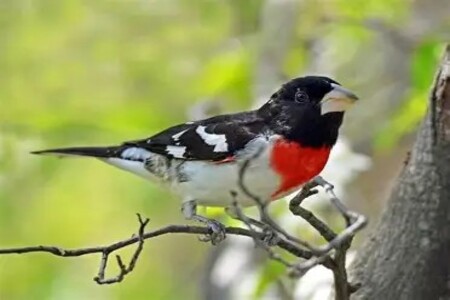
The Rose-breasted Grosbeak is one of Wisconsin's most striking summer songbirds. Males display a bold combination of black upperparts, white underparts, and a brilliant rose-red patch across the chest. Females are brown and heavily streaked, resembling large sparrows, but both sexes share a thick, powerful bill.
These birds return to Wisconsin each spring to breed in deciduous and mixed forests, woodland edges, and wooded neighborhoods. Their rich, musical songs often reveal their presence high in the treetops.
Rose-breasted Grosbeaks feed on insects, seeds, fruits, and other plant material. During migration, they sometimes visit backyard feeders, giving birdwatchers an opportunity to appreciate their beautiful plumage and distinctive behavior.
Whether singing from the forest canopy or visiting a sunflower seed feeder, the Rose-breasted Grosbeak is a memorable sight for Wisconsin birdwatchers.
HOW TO IDENTIFY A ROSE-BREASTED GROSBEAK
The Rose-breasted Grosbeak is a medium-sized songbird measuring approximately 7–8½ inches long. Its large, triangular bill is one of its most distinctive features and is well suited for cracking seeds.
Male Identification
Adult breeding males have a striking black head and back, white underparts, and a brilliant rose-red patch on the upper chest. Their black wings display prominent white markings, especially noticeable during flight.
Female Identification
Females look quite different from males. They have brown upperparts, heavily streaked underparts, a bold pale eyebrow stripe, and a thick, pale bill. Their appearance can resemble a large sparrow, but their size and substantial bill help distinguish them.
Young Birds
Juveniles generally resemble females, with brown, streaked plumage. Young males gradually develop their distinctive black, white, and rose-red coloring as they mature.
Key Identification Clues
Watch for the bird's heavy bill, contrasting wing markings, and sturdy build. During spring and summer, males are especially easy to recognize by their bright red chest patch.
Females can be harder to identify, so watch for their bold facial markings, heavily streaked breast, and large bill.
Rose-breasted Grosbeaks are often found high in leafy trees, where their rich songs may reveal their presence before they become visible.
SOUNDS AND BEHAVIOR
Songs and Calls
The Rose-breasted Grosbeak is known for its rich, flowing song, often compared to that of an American Robin but with a sweeter, more melodious quality. Its song consists of clear, whistled phrases that rise and fall in a musical pattern.
Both males and females can sing, although males are more frequently heard during the breeding season. The species also produces a distinctive, sharp chink call that may sound similar to the squeak of a sneaker on a hard floor.
Behavior and Activity
Rose-breasted Grosbeaks often remain high in the forest canopy, moving deliberately among branches as they search for food. Their songs may reveal their presence long before they become visible.
During spring migration, these birds sometimes visit backyard feeders, particularly those offering black-oil sunflower seeds. Their large bills allow them to crack seeds efficiently.
Courtship and Territorial Behavior
During the breeding season, males sing to establish territories and attract mates. Both sexes participate in nesting activities, and males may even sing quietly while incubating eggs.
Although they can be difficult to spot among dense foliage, Rose-breasted Grosbeaks reward patient observers with beautiful songs, striking plumage, and fascinating behavior.
HABITAT AND DIET
Where It Lives
Rose-breasted Grosbeaks spend spring and summer in Wisconsin's deciduous and mixed forests, particularly where mature trees, woodland edges, and dense shrubs provide suitable nesting and feeding habitat.
They are often found in oak-maple forests, wooded parks, forest clearings, and neighborhoods with established trees. During migration, they may appear in a wider variety of wooded habitats, including backyard gardens.
What It Eats
Rose-breasted Grosbeaks eat a varied diet of insects, seeds, fruits, and buds. During the breeding season, caterpillars, beetles, and other insects provide important nourishment for adults and growing young.
Their large, powerful bills allow them to crack seeds and handle a variety of plant foods. They also consume berries and other fruits when available.
Backyard Feeding
During spring migration, Rose-breasted Grosbeaks sometimes visit backyard feeders offering black-oil sunflower seeds.
Platform feeders and sturdy hopper feeders provide convenient feeding locations for these relatively large songbirds.
Planting native trees and shrubs can also help attract insects and provide natural food and shelter.
Wisconsin Habitat Notes
In Wisconsin, Rose-breasted Grosbeaks are most commonly encountered from late spring through summer, especially in wooded areas with a mixture of mature trees and understory vegetation.
Their melodic songs often make them easier to detect than their appearance, particularly when they remain hidden among the leaves.
WHEN AND WHERE TO FIND ROSE-BREASTED GROSBEAKS IN WISCONSIN
Spring — April through May
Rose-breasted Grosbeaks return to Wisconsin during spring migration, with most arriving in late April and May. Their rich, musical songs often announce their presence in wooded areas before the birds are visible.
Spring is an especially rewarding time to look for these colorful songbirds. Migrating grosbeaks sometimes visit backyard feeders offering black-oil sunflower seeds.
Summer — June through August
During summer, Rose-breasted Grosbeaks breed in deciduous and mixed forests throughout much of Wisconsin.
Look for them in wooded parks, mature forests, and woodland edges where tall trees and shrubs provide feeding and nesting opportunities.
Males frequently sing from elevated perches, although dense summer foliage can make them challenging to locate.
Fall — August through September
Rose-breasted Grosbeaks begin leaving Wisconsin during late summer and early fall, migrating south toward their wintering grounds in Mexico, Central America, and northern South America.
Fall migrants may occasionally visit wooded neighborhoods and backyard feeders before continuing south.
Winter — October through March
Rose-breasted Grosbeaks are generally absent from Wisconsin during winter. They spend the colder months primarily in tropical forests and other wooded habitats farther south.
Where to Look in Wisconsin
Good places to search for Rose-breasted Grosbeaks include deciduous forests, woodland edges, wooded parks, and natural areas with mature trees.
Listen for their robin-like musical songs during May and June, and watch for movement in the middle and upper branches of leafy trees.
Spring migration is often the easiest time to observe males in their striking black, white, and rose-red plumage.
NESTING AND FAMILY LIFE
Building the Nest
Rose-breasted Grosbeaks typically build their nests in deciduous trees or tall shrubs, often near woodland edges or openings. The nest is a loosely constructed, cup-shaped structure made from twigs, grasses, stems, and other plant materials.
Both the male and female participate in nest construction, selecting a location among branches that provides some protection from predators.
Eggs and Young
A typical clutch contains three to five eggs, usually pale greenish-blue with reddish-brown markings.
Both parents share incubation duties, which generally last about 12–14 days. Males sometimes sing softly while sitting on the nest.
After hatching, both parents feed the nestlings a diet that includes insects and other nutritious foods. Young grosbeaks typically leave the nest approximately 9–12 days after hatching, although they continue receiving parental care afterward.
Raising a Family in Wisconsin
Rose-breasted Grosbeaks generally raise one brood per breeding season in Wisconsin.
During late spring and summer, watch for adults carrying nesting materials or food through wooded areas. Their activity may suggest a family is nearby.
Conservation and Habitat Protection
Maintaining healthy deciduous and mixed forests is important for Rose-breasted Grosbeaks. Preserving mature trees, native shrubs, and connected woodland habitats provides nesting sites and feeding opportunities.
Keeping cats indoors and minimizing disturbances around nesting areas can also help protect these beautiful migratory songbirds.
By protecting Wisconsin's woodlands and supporting native vegetation, birdwatchers can help ensure that Rose-breasted Grosbeaks continue returning each spring.