sora
Listen to the Sora
Scientific Name: Porzana carolina
Family: Rallidae (Rails, Gallinules, and Coots)
By Les Miller
introduction/overview
The Sora (Porzana carolina) is a small, secretive marsh bird found in Wisconsin's freshwater wetlands during the warmer months. Although it often remains hidden among dense cattails, sedges, and other marsh vegetation, its distinctive descending, whinnying call can reveal its presence. With its short yellow bill, gray face, brown patterned back, and quick movements through wetland plants, the Sora is a rewarding discovery for birders who enjoy exploring Wisconsin's marshes.
How to Identify the Sora
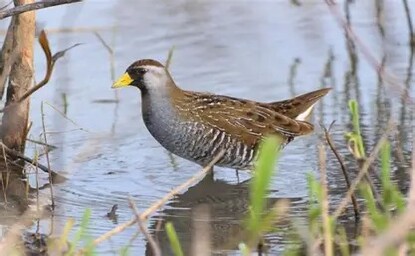
The Sora is a small, compact marsh bird measuring about 8–10 inches long. It has a short, thick yellow bill, a gray face and breast, and a brown back marked with black-and-white streaks. During the breeding season, adults often show a black patch around the base of the bill and throat.
Its short tail is frequently held upright, revealing white feathers underneath. Long toes help the Sora walk across soft mud and floating marsh vegetation without sinking.
Unlike the larger Virginia Rail, which has a long, slender, reddish bill, the Sora's short yellow bill is one of its most reliable identification clues. Because Soras spend much of their time hidden among cattails and sedges, birders often hear their distinctive calls before catching a glimpse of one.
Sounds and Behavior
The Sora is much easier to hear than to see. Its best-known call is a series of descending, whinnying notes that sound almost like a small horse. Soras also give a sharp, repeated two-note call and other short whistles, especially during the breeding season.
These secretive birds spend much of their time walking through dense marsh vegetation, slipping between cattails, sedges, and shallow pools. Their long toes help them move across floating plants and soft mud. Although they usually remain concealed, Soras sometimes venture into small openings along marsh edges to search for food.
In Wisconsin, listen for Soras in spring and early summer, especially in the early morning and evening, when marsh birds are often most vocal. If you hear one calling, remain still and watch nearby openings in the vegetation. Patience may reward you with a brief glimpse of this elusive wetland bird.
Habitat and Diet
Soras inhabit freshwater marshes, shallow wetlands, and wet meadows throughout Wisconsin. They prefer areas with dense cattails, sedges, rushes, and other emergent vegetation, especially where patches of shallow water and muddy edges provide feeding opportunities.
Unlike herons that hunt larger aquatic prey, Soras feed on a mixture of plant material and small animals. Their diet includes seeds from wetland plants, aquatic insects, snails, small crustaceans, and other invertebrates. They search for food by walking slowly through shallow water and probing mud or picking items from plants and the water's surface.
In Wisconsin, productive places to search for Soras include marsh edges, wetland boardwalks, and shallow pools surrounded by vegetation. Because these birds are easily concealed, listening for their calls is often the best way to discover that a Sora is nearby.
When and Where to Find Soras in Wisconsin
Soras are migratory marsh birds that typically arrive in Wisconsin during April and May, with many remaining through September before heading south. Spring and early summer are especially good times to listen for their distinctive calls, and you may also encounter migrating birds in suitable wetlands during fall.
Horicon Marsh National Wildlife Refuge is one of Wisconsin's best-known places to search for Soras. Other promising locations include Cherokee Marsh in Dane County, Crex Meadows Wildlife Area in Burnett County, and shallow wetlands statewide. Look for marshes with dense cattails and sedges, plus patches of open, shallow water.
Early mornings and evenings are often productive times to listen for Soras. Walk quietly along established wetland trails or boardwalks and pause frequently to listen. Their descending, whinnying calls may reveal birds hidden only a short distance away. Because Soras are secretive, hearing one is often just as rewarding as seeing one.
Nesting and Family Life
Soras nest in Wisconsin's freshwater marshes, usually choosing sheltered locations among dense cattails, sedges, and other wetland vegetation. Their nests are shallow, cup-shaped structures made from marsh plants and often placed just above shallow water, where surrounding vegetation provides protection.
During the breeding season, females typically lay 8 to 12 buff-colored eggs marked with brown spots. Both parents help incubate the eggs for approximately three weeks. After hatching, the downy black chicks can leave the nest quickly and begin exploring nearby marsh vegetation under their parents' care.
Sora families are difficult to observe because they remain hidden among thick wetland plants. Birders should avoid entering nesting habitat or disturbing birds that are calling. Watching quietly from established trails and boardwalks provides the best opportunity to appreciate these secretive marsh birds while protecting their young.
Observing Soras in Wisconsin
Observing a Sora requires patience and careful listening. These secretive marsh birds spend much of their time hidden among cattails, sedges, and other dense vegetation. Their distinctive descending whinny is often the first clue that one is nearby.
When exploring Wisconsin wetlands, look for small openings between marsh plants, shallow muddy edges, and patches of floating vegetation. Soras occasionally step into view while searching for seeds and small invertebrates. Binoculars can help you identify their short yellow bills, gray faces, and upright tails without approaching too closely.
For the best birding experience, visit marshes during the early morning or evening, when Soras are often more vocal. Stay on established trails or boardwalks, listen quietly, and let the birds move naturally through their habitat. Even a brief sighting of a Sora can be a memorable reward for a patient Wisconsin birder.