White-breasted Nuthatch
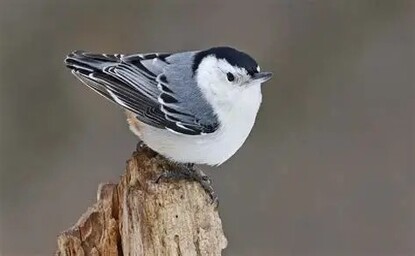
Sitta carolinensis — Family: Sittidae
The White-breasted Nuthatch is a small, energetic woodland bird found throughout Wisconsin. Recognizable by its white face and underparts, blue-gray back, and dark crown, it is often seen moving along tree trunks and branches in search of food.
Unlike many birds that climb upward, the White-breasted Nuthatch frequently travels headfirst down tree trunks. Its distinctive nasal calls and lively behavior make it an entertaining bird to observe in woodlands, parks, and backyards.
A year-round Wisconsin resident, this nuthatch occurs in mature deciduous and mixed forests, especially where large trees provide feeding and nesting opportunities.
HOW TO IDENTIFY A WHITE-BREASTED NUTHATCH
The White-breasted Nuthatch is a compact songbird measuring approximately 5–6 inches long, with a short tail, sturdy legs, and a long, pointed bill.
Its most recognizable features are a blue-gray back, bright white face and underparts, and a dark crown that extends toward the back of the neck. Males typically have a black crown, while females often have a slightly lighter, grayish crown. Both sexes may show rusty coloring beneath the tail.
One of the easiest ways to identify this bird is by watching how it moves. White-breasted Nuthatches frequently climb headfirst down tree trunks, often stopping to inspect bark crevices for insects and hidden food.
Their distinctive markings, nasal calls, and unusual climbing behavior make them relatively easy to recognize once you know what to look for.
SOUNDS AND BEHAVIOR
The White-breasted Nuthatch is often heard before it is seen. Its most familiar call is a loud, nasal yank-yank-yank, frequently repeated as the bird moves through trees. Its song is a series of soft, rapid, whistled notes, most often heard during the breeding season.
This active little bird moves along tree trunks and branches in almost every direction, including headfirst downward. Its strong feet and sharp claws help it cling to bark while searching crevices for insects, spiders, and other small creatures.
White-breasted Nuthatches also collect seeds and nuts, sometimes wedging them into bark and striking them with their bills to open them. They frequently store food in bark crevices for later use.
Unlike many migrating songbirds, White-breasted Nuthatches remain in Wisconsin throughout the year, making their distinctive calls and climbing behavior familiar sights and sounds in every season.
HABITAT AND DIET
Where It Lives
The White-breasted Nuthatch prefers mature deciduous and mixed forests, particularly those with large oak, maple, and other hardwood trees. It also inhabits wooded parks, neighborhoods, and backyards where established trees provide food and nesting opportunities.
In Wisconsin, this bird is especially common in woodlands with mature trees and can often be spotted searching the bark of trunks and large branches.
What It Eats
White-breasted Nuthatches feed on insects, spiders, seeds, and nuts. During warmer months, they search tree bark for beetles, caterpillars, ants, and other small invertebrates.
In fall and winter, seeds and nuts become increasingly important. Nuthatches frequently visit backyard feeders offering sunflower seeds, peanuts, and suet.
These resourceful birds also hide seeds and other food in bark crevices, returning to these stored supplies when food becomes harder to find.
WHEN AND WHERE TO FIND THEM IN WISCONSIN
The White-breasted Nuthatch is a year-round resident throughout Wisconsin. Unlike many songbirds that migrate south for winter, it remains in established woodland territories through all four seasons.
Spring and Summer
During spring, listen for the nuthatch's distinctive nasal calls in mature hardwood forests, wooded parks, and neighborhoods with large trees. Breeding pairs become active around nesting cavities, while adults can often be seen searching tree trunks for insects to feed their young.
Fall and Winter
As temperatures cool, White-breasted Nuthatches increasingly rely on seeds, nuts, and stored food. They frequently visit backyard feeders stocked with sunflower seeds, peanuts, and suet. During winter, they may join mixed-species foraging flocks with chickadees, titmice, and woodpeckers.
Where to Look
Throughout Wisconsin, search mature deciduous and mixed woodlands, forest edges, wooded parks, and neighborhoods with established trees. Look carefully at trunks and large branches, particularly when you hear the bird's familiar nasal calls.
Because this species remains in Wisconsin throughout the year, even a short walk through a wooded park or a few minutes watching a backyard feeder can provide an opportunity to observe it.
NESTING AND CONSERVATION
Nesting and Family Life
White-breasted Nuthatches typically nest in natural tree cavities or abandoned woodpecker holes, often choosing mature trees in deciduous or mixed forests. The female builds a nest using bark fibers, grasses, fur, and other soft materials.
A typical clutch contains 5–9 eggs. The female incubates the eggs for approximately two weeks while the male brings her food. After hatching, both parents help feed the young until they leave the nest, usually about two weeks later.
Conservation
The White-breasted Nuthatch is widespread and is currently classified as a species of Least Concern. Although its overall conservation status is relatively secure, preserving mature trees and healthy woodland habitats remains important.
Wisconsin residents can help by protecting large native trees, retaining safe standing dead trees where appropriate, planting native vegetation, and reducing unnecessary pesticide use.
Providing sunflower seeds, unsalted peanuts, or suet can also help attract these lively birds to backyard feeding stations.