Yellow Warbler
Listen to the Yellow Warbler
Scientific Name; Setophaga petechia
Family: Parulidae (New World Warblers)
By Les Miller
introduction/overview
The Yellow Warbler is one of Wisconsin's brightest and most cheerful summer songbirds. Its golden-yellow plumage, small size, and sweet, whistled song make it a favorite among birdwatchers.
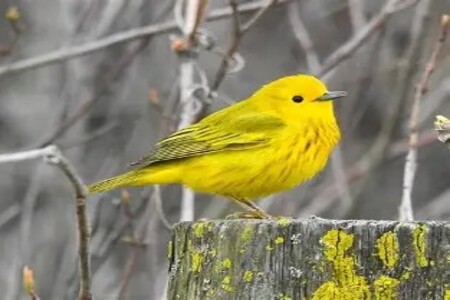
Male Yellow Warblers display brilliant yellow feathers with reddish streaks across the breast, while females are generally softer yellow with less noticeable markings. Both sexes have a slender bill suited for catching insects.
These active little birds return to Wisconsin each spring to breed in shrubby wetlands, willow thickets, streamside vegetation, and brushy woodland edges. They frequently move among leaves and branches, searching for caterpillars and other insects.
Their familiar song, often remembered as sweet-sweet-sweet, I'm so sweet, helps birdwatchers locate them even when they remain hidden among dense foliage.
Whether singing from a willow branch or searching for insects in a wetland thicket, the Yellow Warbler brings a welcome splash of color to Wisconsin's spring and summer landscapes.
HOW TO IDENTIFY A YELLOW WARBLER
The Yellow Warbler is a small, brightly colored songbird measuring approximately 4¾–5 inches long. Its rounded head, slender pointed bill, and brilliant yellow plumage make it one of Wisconsin's most recognizable warblers.
Male Identification
Adult breeding males are bright golden-yellow from head to tail, with distinctive reddish-brown streaks running down the breast and sides. Their dark eyes and thin bill contrast with the vibrant yellow feathers.
Female Identification
Females are generally a softer yellow, sometimes with olive-yellow shading on the upperparts. Their reddish breast streaks are usually faint or absent, giving them a more uniform appearance than males.
Young Birds
Juvenile Yellow Warblers are often paler than adults, with yellowish or olive-toned plumage and few noticeable breast markings.
Key Identification Clues
Look for the bird's nearly all-yellow appearance, small size, and active movements among shrubs and leafy branches. The reddish breast streaks of breeding males are particularly helpful for identification.
Yellow Warblers are frequently seen in willows, wetland shrubs, and brushy areas near water. Their sweet, whistled songs often reveal their presence before they become visible.
Unlike the American Goldfinch, Yellow Warblers lack bold black wings and a black cap. Their slender insect-catching bills also distinguish them from the thicker bills of finches.
SOUNDS AND BEHAVIOR
Songs and Calls
The Yellow Warbler is known for its cheerful, high-pitched song, often described as "sweet-sweet-sweet, I'm so sweet!" The song consists of a series of clear, musical notes that usually end with an emphasized flourish.
Males often sing in spring and early summer to establish territories and attract mates. Yellow Warblers also produce short, sharp contact and alarm calls when communicating or responding to disturbances.
Behavior and Activity
Yellow Warblers are active, energetic birds that spend much of their time moving through shrubs, willows, and leafy branches to find insects.
They frequently glean caterpillars, small beetles, flies, and other insects from leaves and twigs. Their quick movements can make them challenging to follow, especially in dense vegetation.
Territorial and Nesting Behavior
During the breeding season, males defend territories by singing and occasionally chasing off competing birds.
Yellow Warblers sometimes face nest parasitism by Brown-headed Cowbirds, which lay eggs in other birds' nests. Remarkably, a Yellow Warbler may respond by building a new nest layer over the unwanted eggs.
Observing Yellow Warblers in Wisconsin
Listen for their distinctive songs along wetland edges, willow thickets, and brushy stream corridors during May and June.
Their bright yellow feathers and energetic behavior make them especially rewarding to watch during Wisconsin's spring and summer birding season.
HABITAT AND DIET
Where It Lives
Yellow Warblers are found throughout Wisconsin during the spring and summer breeding season. They favor shrubby wetlands, willow thickets, streambanks, lakeshores, and brushy areas with dense vegetation.
Unlike many warblers that spend much of their time high in forest canopies, Yellow Warblers frequently occupy low shrubs and small trees, making them easier to observe.
They are especially associated with willows and other moisture-loving plants growing along waterways and wetland edges.
What It Eats
Yellow Warblers feed primarily on insects and other small invertebrates. Their diet includes caterpillars, flies, beetles, moths, and spiders.
They search for food by moving quickly among leaves and branches, picking insects from foliage and occasionally catching flying insects.
During the nesting season, protein-rich insects provide essential nourishment for growing young.
Backyard Birding
Yellow Warblers rarely visit traditional seed feeders because their diet consists mainly of insects.
However, yards with native shrubs, willow trees, and insect-friendly vegetation may attract them during migration or provide suitable habitat near wetlands.
Avoiding unnecessary pesticide use can help maintain the insect populations these birds depend on.
Wisconsin Habitat Notes
In Wisconsin, Yellow Warblers are especially noticeable from May through July in suitable wetland and shrubby habitats.
Listen for their bright, musical songs along marsh edges, stream corridors, and brushy openings. Their preference for dense vegetation makes patient observation especially rewarding.
WHEN AND WHERE TO FIND YELLOW WARBLERS
Spring — April through May
Yellow Warblers return to Wisconsin during spring migration, with most arriving in May. Their bright yellow plumage and cheerful songs make them a welcome sight along wetlands, streams, and brushy woodland edges.
Spring is an excellent time to observe singing males as they establish breeding territories in willow thickets and other shrubby habitats.
Summer — June through August
During summer, Yellow Warblers breed throughout much of Wisconsin. They are especially common in shrubby wetlands, along lakeshores, in stream corridors, and in areas with dense willow growth.
June and early July are especially rewarding for hearing territorial males and watching adults search for insects among the leaves.
By late summer, many Yellow Warblers begin moving south, and their singing becomes less frequent.
Fall — August through September
Yellow Warblers are relatively early fall migrants. Many begin departing Wisconsin in August, although some may still be encountered during September.
Look for migrating birds in shrubs, woodland edges, and wetland vegetation as they travel toward their wintering grounds.
Winter — October through March
Yellow Warblers generally do not remain in Wisconsin during winter. They spend the colder months primarily in Mexico, Central America, the Caribbean, and northern South America.
Their return each spring is a seasonal highlight of Wisconsin birdwatching.
Where to Look in Wisconsin
Promising locations include Cherokee Marsh Conservation Park in Dane County, Pheasant Branch Conservancy near Middleton, and other wetland areas with willow thickets and dense shrubs.
Listen for the Yellow Warbler's distinctive sweet-sweet-sweet, I'm so sweet song during May and June.
Early mornings are often especially productive, when males sing from exposed branches before moving back into the vegetation.
NESTING AND FAMILY LIFE
Building the Nest
Yellow Warblers build small, neatly woven, cup-shaped nests in shrubs and small trees, often near wetlands, streams, or lakeshores. Willows and other dense shrubs provide excellent nesting locations.
The female constructs most of the nest using grasses, plant fibers, bark strips, and spider silk. She lines the interior with soft materials such as plant down and fine fibers.
Nests are usually positioned in branch forks, where surrounding foliage provides some protection from predators.
Eggs and Young
A typical clutch contains four to five eggs, usually pale grayish or greenish-white with brown markings.
The female incubates the eggs for approximately 11–12 days. After hatching, both parents feed the nestlings a diet consisting primarily of insects.
Young Yellow Warblers generally leave the nest about 9–12 days after hatching but continue receiving parental care as they develop their flying and feeding skills.
An Unusual Nesting Adaptation
Yellow Warblers sometimes experience brood parasitism by Brown-headed Cowbirds, which lay eggs in other bird species' nests.
Rather than raising the cowbird's young, a Yellow Warbler may build an additional nest floor over the unwanted egg, occasionally creating a nest with multiple layers.
Raising a Family in Wisconsin
Yellow Warblers generally raise one brood each breeding season in Wisconsin, although they may attempt replacement nests if an earlier nest fails.
Their nesting activity is most noticeable during late spring and early summer in wetlands and shrubby habitats.
Conservation and Habitat Protection
Protecting willow thickets, native shrubs, and healthy wetland edges helps provide nesting habitat for Yellow Warblers.
Maintaining insect populations and minimizing pesticide use are also important because these birds rely heavily on insects to feed themselves and their young.
Preserving Wisconsin's wetland and streamside vegetation helps ensure that Yellow Warblers continue returning each spring.